


Think an SEC investigation announced is just another headline? Think again.
The moment the SEC goes public, the clock starts ticking for investors.
Early signals — subpoenas, DOJ links, or big unexplained trading spikes — change the risk picture fast.
This post gives a simple, step‑by‑step risk assessment framework investors can use immediately.
You’ll learn how to identify probe type, read filings for material disclosure, spot market and criminal red flags, and set short‑term watch points so you can judge whether to hold, sell, or dig deeper.
Immediate Risk Assessment Actions When an SEC Investigation Is Announced

The clock starts ticking the moment the SEC goes public with an investigation. Every year the Commission launches hundreds of enforcement actions, each one beginning with early fact-gathering. That usually means a Matters Under Inquiry (MUI) or formal steps kicked off by whistleblower tips, Suspicious Activity Reports from banks, or trading red flags caught by surveillance systems. Most MUIs either convert to full investigations or close within about 60 days. During that window, the Division of Enforcement is pulling records, talking to witnesses, and deciding whether to escalate to compulsory subpoenas and sworn testimony. If they think disclosure will tip off targets who might destroy evidence or move assets, they’ll skip the notice entirely, especially when there’s a parallel criminal investigation running. The red flags that scream severe risk? Formal subpoenas, DOJ coordination, big unexplained trading spikes, and any hint that records have been destroyed or hidden.
The second you learn an SEC investigation has been announced, run a rapid legal, financial, and exposure scan. Start with materiality: could the alleged conduct reasonably influence an investor’s decision? Revenue misstatements, undisclosed insider trades, market manipulation schemes all hit that threshold. Review the company’s disclosure obligations under Form 8‑K and prior public filings to check whether management has already acknowledged the inquiry. When and in what terms? Look for early signals of enforcement escalation. Has the company received an Order of Investigation that grants the SEC subpoena power and the ability to compel testimony under oath? Is there evidence that DOJ, FBI, or other criminal authorities are involved? Parallel criminal exposure fundamentally changes the risk calculus and requires separate criminal defense counsel.
Build a baseline risk profile with these immediate actions:
- Identify the probe type. Confirm whether it’s still an informal MUI, has moved to a formal investigation with subpoena power, or has reached the Wells stage invitation to respond before charges are filed.
- Review all SEC filings. Read Item 1.01, Item 8.01, and risk factor sections of the latest 10‑K and 10‑Q for prior mentions of regulatory inquiries or investigations.
- Evaluate the evidence posture. Determine whether the company has implemented a litigation hold, engaged forensic accountants, or retained outside counsel. Weak or delayed preservation signals higher risk of spoliation findings.
- Monitor market reaction. Watch trading volume, price moves, short interest changes, and options activity for signs that sophisticated investors are pricing in enforcement risk.
- Check for criminal indicators. Search public dockets, news reports, and management statements for any mention of DOJ referrals, grand jury subpoenas, or criminal target letters.
Once you’ve mapped the type and stage of the investigation, assess whether it threatens near term liquidity, ongoing operations, or stock value. If the company is regulated (broker dealer, investment adviser, registered fund) an SEC enforcement action can lead to suspension or revocation of registration, which effectively shuts down the business. Even for non‑regulated issuers, injunctions can block fundraising, halt trading in the company’s securities, or bar executives from serving as officers or directors. When criminal exposure is present, reputational damage accelerates and the risk of indictment adds uncertainty that markets can’t easily price. Use the 60 day MUI decision window as your first checkpoint. If the SEC moves to formal investigation quickly, the evidence threshold has likely been met and settlement discussions should begin in parallel with any Wells response.
Understanding the Scope and Type of SEC Investigation Risk
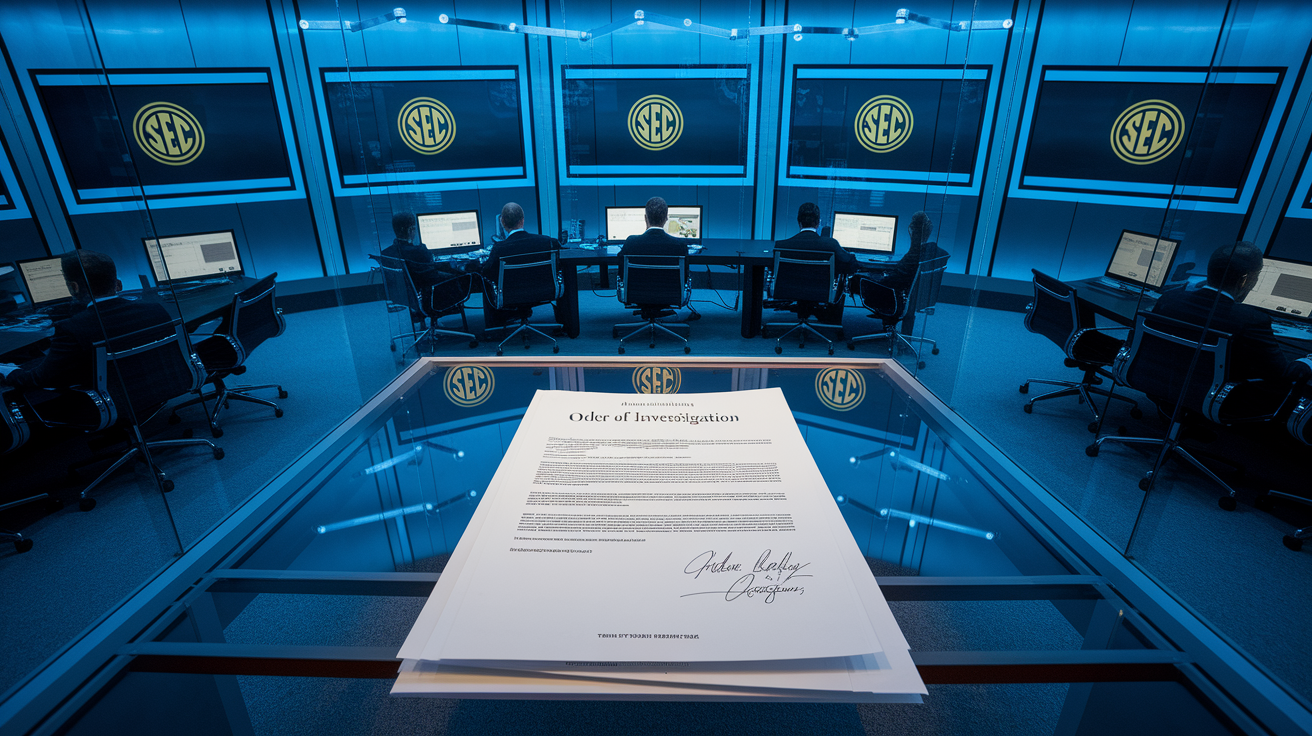
Not every inquiry carries the same weight. An MUI is the SEC’s preliminary fact gathering phase. Staff can request documents informally and conduct voluntary interviews, but they can’t compel testimony or issue subpoenas. Many MUIs close without enforcement action. A formal investigation, authorized by an Order of Investigation approved by a majority of Commissioners, empowers the Division of Enforcement to administer oaths, subpoena witnesses, compel their attendance, and require document production. At this stage, the SEC often deploys forensic accountants, economists, and securities law specialists to analyze bank records, brokerage statements, internal emails, chat room messages, and trading data. If staff concludes that charges are warranted, they may issue a Wells Notice, an invitation to submit a written statement and request a meeting before the Division recommends enforcement action to the Commission. Wells Notices are discretionary. Staff may withhold them if disclosure would compromise a covert criminal investigation or risk the destruction of evidence.
Risk severity escalates sharply when forensic teams are assigned, particularly in cases alleging market manipulation, insider trading, or complex accounting fraud. Forensic accountants reconstruct cash flows, trace misappropriated funds, and test the accuracy of non‑GAAP metrics disclosed to investors. Economists model trading patterns, estimate abnormal returns around alleged inside information, and calculate ill-gotten gains for disgorgement. When these resources are deployed, the SEC has already identified specific transactions or disclosures it believes violate the law, and the burden shifts to the target to disprove scienter, causation, or loss. Investigations involving coordinated trading schemes, pump and dump promotions, or executive led accounting manipulations almost always proceed to formal charges unless early settlement terms are reached.
| Investigation Type | Key Powers Involved | Risk Severity Indicators |
|---|---|---|
| MUI (Matters Under Inquiry) | Voluntary document requests; informal interviews by phone or in person | Low to moderate; many close without action; 60 day conversion or closure decision typical |
| Informal Inquiry | Staff may send preservation letters; can request Background Questionnaires | Moderate; signals staff interest; no compulsion yet but preservation failures create risk |
| Formal Order of Investigation | Subpoenas for documents and testimony; sworn testimony under oath; forensic analysis | High; majority of Commissioners approved; compulsory process in effect; enforcement recommendation likely follows |
| Wells Stage | Opportunity to submit Wells response and request meeting; staff may disclose salient third party evidence | Very high; staff has concluded charges are warranted; quality of response and cooperation materially affect settlement terms and penalties |
Legal Exposure and Regulatory Risk Drivers in an SEC Investigation

The substance of alleged violations determines both the range of potential penalties and the urgency of remediation. Common enforcement theories include misleading disclosures or omissions in periodic reports or press releases, insider trading by executives, employees, or tippees, market manipulation through wash trades, matched orders, or spoofing, misappropriation of customer funds or securities, and failures in anti money laundering controls or suspicious activity monitoring. Each theory carries different proof burdens. Insider trading and manipulation require evidence of scienter, while certain disclosure violations can be strict liability. Different remedies. Civil penalties, disgorgement of ill-gotten gains, injunctions, and officer and director bars are standard in SEC enforcement. Criminal referrals to DOJ under Executive Order 14294 add the possibility of prison time and create parallel exposure that investors must evaluate separately.
A Wells Notice shifts the posture from investigation to imminent recommendation. Staff will provide four weeks to submit a written response, and that period can be extended for good cause. During Wells preparation, the SEC is now required to inform recipients of any “salient, probative” third party evidence the staff reasonably believes the recipient may not know, subject to confidentiality constraints. Staff must also make “reasonable efforts” to allow review of the investigative file, though they retain discretion to deny access to uncooperative targets. Wells meetings are “typically granted” and should be scheduled within four weeks of the submission. Usually one meeting is held with senior leadership at the associate director level or above. Voluntary cooperation (self reporting when appropriate, thorough internal investigation summaries, identification of key documents and witnesses, translations of foreign language records, and expert financial analyses) can materially improve the prospects for reduced penalties, deferred prosecution agreements, or non prosecution agreements. Cooperation credit is limited if the misconduct has already been reported in the media, if the SEC learned of it from another source, or if disclosure or government investigation was imminent.
Six factors amplify legal risk once an investigation is underway:
- Parallel criminal exposure. When DOJ, FBI, or IRS are involved, targets face felony charges, grand jury subpoenas, and search warrants. Criminal standards require proof beyond reasonable doubt but overlap with civil elements.
- Trading anomalies. Abnormal volume, price spikes, or options activity immediately before material announcements suggest insider trading and trigger economic analysis by the SEC.
- Non‑GAAP misstatements. Presenting adjusted earnings, EBITDA, or free cash flow in ways that obscure GAAP results or omit required reconciliations violates Regulation G and risks enforcement.
- AML and suspicious activity findings. Suspicious Activity Reports filed by banks or broker dealers trigger SEC and FinCEN scrutiny. Failures to file SARs or maintain adequate AML controls can result in separate enforcement actions.
- Record destruction or concealment. Any attempt to delete emails, destroy documents, or withhold evidence from subpoena responses is treated as obstruction and significantly increases penalties.
- Senior executive involvement. When the CEO, CFO, or board members participated in or directed the misconduct, the SEC pursues officer and director bars, clawbacks of incentive compensation, and higher civil penalties.
Combine the alleged violation, the strength of the evidence, and the cooperation posture to estimate the likelihood of settlement versus litigation. Historically, most SEC enforcement matters settle. Trials are reserved for the most egregious cases or when targets refuse reasonable terms. Settlement outcomes range from cease and desist orders with no penalty (rare) to multimillion dollar disgorgement, penalties, and permanent bars. Review recent enforcement actions in the same violation category (insider trading, financial reporting fraud, market manipulation) to benchmark penalty ranges and officer bar precedents. If the company has implemented meaningful remediation (disciplining responsible employees, strengthening internal controls, making corrective disclosures, clawing back executive compensation) settlement terms are likely to be more favorable.
Financial, Operational, and Reputational Impacts When an SEC Probe Is Announced

Stock prices typically fall when an SEC investigation becomes public, with the size of the decline tied to the severity of alleged violations and the transparency of prior disclosures. Watch trading volume for unusual spikes. Heightened activity often signals that institutional holders are reducing exposure or that short sellers are building positions on enforcement risk. Monitor short interest reported bi‑weekly by exchanges and unusual options activity, particularly out of the money puts, which can indicate sophisticated traders are hedging or speculating on further downside. Liquidity can evaporate quickly if market makers widen spreads or if the company’s credit rating is downgraded due to regulatory uncertainty. For smaller issuers, the cost of legal defense, forensic consultants, and potential settlements can strain cash reserves and force dilutive financings or asset sales.
Operational risks extend beyond fines. The SEC can seek (and courts can grant) injunctions that halt securities offerings, freeze trading in the company’s stock, or prohibit the company from conducting certain business activities until compliance is demonstrated. For regulated entities such as broker dealers, investment advisers, or registered funds, enforcement actions can result in suspension or revocation of registration, which effectively ends the business. Leadership disruption is common. Executives named in enforcement actions often resign or are placed on leave, and the board may install interim management while the investigation proceeds. Compliance burdens multiply. Companies must dedicate resources to document production, privilege reviews, litigation holds, and often conduct parallel internal investigations led by outside counsel and forensic accountants. These efforts divert attention from revenue generating operations and delay strategic initiatives.
Reputational damage is immediate and can outlast the formal resolution of the case. Customers, counterparties, and vendors reassess credit and business relationships. Talent may leave for competitors. Suppliers may demand stricter payment terms or collateral. Material event disclosure under Item 8.01 of Form 8‑K is required promptly when a government investigation becomes known, and Regulation FD limits selective disclosure to analysts or investors. Management must carefully craft public statements to avoid waiving privilege or contradicting positions taken in Wells responses, while still satisfying the obligation to keep shareholders informed. Investor relations teams should prepare FAQs, hold special calls if warranted, and coordinate messaging with legal counsel to maintain credibility. When the SEC investigation is resolved (whether by settlement, administrative order, or litigation) final disclosures and any agreed waivers of disqualifications must be reported and explained. The long term impact on valuation depends on whether the company demonstrates genuine remediation, restores controls, and rebuilds trust with regulators and the market.
Evaluating Documentation, Preservation, and Internal Controls Risk

The SEC’s updated Enforcement Manual now requires preservation letters to explicitly request retention of communications on messaging apps and personal devices, and the definition of “document” expressly includes text messages and other electronic messages. When staff issues a preservation letter (which can come “as early as is appropriate” in an investigation) recipients must immediately implement a litigation hold covering all custodians, data sources, and communication platforms. Failure to preserve records, whether through negligence or intent, is a major risk amplifier. Spoliation findings lead to adverse inferences at trial, increased penalties, and can transform a disclosure case into an obstruction matter. Production cover letters must now detail who conducted the search and review, what sources were searched, the location of original documents, and who maintained them. Gaps or inconsistencies in these certifications raise red flags for enforcement staff.
Four indicators signal high internal control risk and increase the likelihood of adverse findings:
- Missing or incomplete privilege logs. Logs must now identify the attorney and client for attorney client privilege claims and specify the anticipated litigation for work product claims. Vague or blanket assertions will be challenged.
- Unclear custodianship or decentralized records. When responsibility for key documents is dispersed across departments, personal devices, or shadow IT systems, the risk of incomplete production and inadvertent destruction rises.
- Heavy personal device usage without monitoring. Employees using personal phones, tablets, or home computers for business communications create blind spots. Companies without mobile device management or bring your own device policies face higher preservation failures.
- Weak Sarbanes Oxley Section 404 evidence. If the company has reported material weaknesses or significant deficiencies in internal controls over financial reporting, those findings suggest broader governance failures that enforcement staff will explore.
Control weaknesses do more than increase SEC scrutiny. They often necessitate financial restatements, which trigger additional disclosure obligations, shareholder litigation, and auditor resignations. When the SEC uncovers evidence that management overrode controls, manipulated accounts, or concealed transactions, it pursues not only disclosure violations but also books and records and internal controls charges under Sections 13(b)(2)(A) and 13(b)(2)(B) of the Exchange Act. The presence of material weaknesses at the time of alleged misconduct makes it harder to argue good faith or reasonable reliance on subordinates, and settlement terms typically require independent consultants to design and monitor remediation over multiple years. Document every step of your preservation and production process, maintain detailed privilege logs, and ensure that any gaps are disclosed to counsel and the SEC promptly. Strong documentation practices reduce enforcement exposure and demonstrate the credible intent to cooperate.
Assessing Cooperation, Remediation, and Wells Stage Risk Factors

Wells submissions have a four week window, though extensions may be requested and are sometimes granted for good cause (complex cases, voluminous investigative files, or coordination with parallel criminal counsel). The SEC staff must now inform Wells recipients of any salient, probative third party evidence the staff reasonably believes the recipient does not know, subject to confidentiality constraints, and staff is directed to make reasonable efforts to permit review of the investigative file. This expanded access creates an opportunity to identify weaknesses in the staff’s case, highlight exculpatory evidence, and tailor the Wells submission to disputed factual and legal issues. White papers and voluntary submissions accepted by staff will generally be provided to the Commission along with any enforcement recommendation, so the quality, thoroughness, and credibility of the response matter. Staff guidance emphasizes that helpful Wells submissions focus on contested facts and law, address the evidence and cite precedent, and bring forward exculpatory material the staff may not have considered.
Cooperation Levers
Cooperation credit depends on the timing, scope, and substance of assistance. The SEC’s updated cooperation framework, built on the Seaboard Report factors, now requires that self policing include both the establishment and the implementation of effective compliance programs. Paper policies alone don’t qualify. Self reporting credit is limited if the misconduct has already been covered in the media, was learned by the SEC from another regulatory agency or whistleblower, or if disclosure or investigation was imminent. “Exemplary” cooperation includes providing a detailed summary of internal investigation findings, identifying key documents and witnesses, translating foreign language materials, and offering expert financial analyses that help staff understand complex transactions. The Division’s Cooperation Committee must approve all cooperation agreements, deferred prosecution agreements (DPAs), non prosecution agreements (NPAs), and grants of immunity, which centralizes decision making and promotes consistency across cases.
Remediation Quality Signals
Effective remediation goes beyond promises. The SEC looks for concrete actions: disciplining or terminating employees who participated in the misconduct, strengthening internal controls and segregation of duties, implementing clawback policies and actually recovering compensation from culpable executives, making prompt corrective disclosures to investors, hiring additional compliance or finance staff, and delivering meaningful training programs that address the root causes identified in the investigation. Remediation plans should be documented, time bound, and independently verified (either through internal audit, external consultants, or ongoing monitoring by the SEC or a court appointed monitor). When remediation is superficial, late, or incomplete, enforcement staff views it as evidence of continued risk and recommends harsher penalties, longer injunctions, and mandatory consultants.
To assess whether cooperation is genuine or merely tactical, review the timeline and substance of the company’s voluntary disclosures. Did management self report promptly after discovering the issue, or only after receiving a subpoena or Wells Notice? Did the internal investigation have true independence (separate counsel reporting directly to an independent board committee) or was it controlled by executives who may themselves be targets? Were key witnesses made available for interviews, or did the company assert blanket privilege or invoke the Fifth Amendment? Did document productions include personal devices, messaging apps, and archived systems, or only sanitized corporate email? Genuine cooperation is transparent, proactive, and includes uncomfortable facts. Tactical cooperation withholds bad news, slow walks production, and deflects responsibility onto lower level employees.
Corrective action timelines directly affect penalty levels and settlement terms. If the company identifies and fixes control failures before the SEC issues a Wells Notice, the remediation carries significant weight. If the fixes come after charges are filed or after a settlement is reached, they’re often mandated as conditions of the resolution rather than credited as voluntary cooperation. Speed matters. The longer misconduct persists, the greater the harm to investors and the higher the disgorgement and penalties. When evaluating cooperation risk, map each remediation step to a specific date and compare those dates to key investigation milestones (MUI opening, subpoena issuance, Wells Notice, settlement discussions). The closer remediation aligns with self discovery rather than external pressure, the stronger the cooperation credit.
Monitoring Progress, Milestones, and Risk Trajectory Through the SEC Process

Track procedural milestones as key risk indicators. The SEC’s 60 day decision window for MUIs tells you when initial evidence gathering is complete and whether staff believes formal investigation is justified. Subpoenas mark the transition to compulsory process and signal that voluntary cooperation is no longer sufficient. Wells Notice issuance means staff have concluded that charges are warranted and are inviting a response before making a formal recommendation to the Commission. Wells meetings are typically scheduled within four weeks of the submission. Attendance and preparation quality materially affect settlement outcomes. If the Commission accepts a settlement offer but rejects a related waiver request (such as a waiver from automatic disqualification as a well known seasoned issuer) the respondent has only five business days to decide whether to proceed with the settlement. Each of these deadlines creates decision points where legal strategy, business priorities, and market conditions must be reassessed.
Scenario analysis helps investors and boards evaluate a range of possible outcomes. In a best case scenario, the SEC closes the MUI without action, the company issues a brief disclosure noting the closure, and the stock recovers. In a base case, the investigation proceeds to a Wells stage, the company submits a strong response with evidence of cooperation and remediation, and the matter settles for disgorgement, a civil penalty, and an injunction without admitting or denying the findings. Typical of most SEC resolutions. In a worst case, the SEC files a civil complaint seeking officer and director bars, substantial penalties, and disgorgement. DOJ files parallel criminal charges. Key executives are indicted. The company faces existential liquidity and reputational crises. Assign rough probabilities to each scenario based on the strength of evidence, quality of cooperation, precedent penalties in similar cases, and the presence or absence of criminal referrals. Update these probabilities as new milestones are reached and new information becomes available.
| Milestone | Typical Timing | Risk Interpretation |
|---|---|---|
| MUI decision (convert or close) | ~60 days from opening | Conversion to formal investigation indicates evidence threshold met; closure reduces near term enforcement risk |
| Formal Order of Investigation issued | After majority Commissioner approval | Compulsory subpoena power granted; forensic resources likely deployed; enforcement recommendation probable |
| Subpoenas and sworn testimony | Weeks to months after formal order | Staff gathering detailed evidence; targets should engage counsel and begin privilege review |
| Wells Notice issued; submission and meeting | 4 week submission window; meeting within 4 weeks of submission | Staff has concluded charges warranted; quality of response and cooperation determine settlement terms |
| Settlement offer and waiver consideration | 5 business days to accept settlement if waiver denied | Final negotiation window; rejection of waiver may make settlement economically unworkable for respondent |
Final Words
An announced SEC probe demands fast, targeted work: identify the probe, preserve documents, run a materiality scan, and watch for DOJ or subpoena signals.
This post gave a compact framework—immediate actions, scope assessment, legal exposure, controls review, cooperation levers, and monitoring milestones—to help you judge near‑term risk.
If you’re wondering “SEC investigation announced how to assess risk”, this guide makes that question practical: follow the steps, prioritize the worst‑case checkpoints, and you’ll protect value and stay ready.
FAQ
Q: How serious is an SEC investigation?
A: An SEC investigation is serious and can lead to fines, disgorgement, injunctions, registration actions, or officer/director bars; risk rises with formal orders, DOJ referrals, or market‑manipulation and insider‑trading allegations.
Q: How do you know if SEC is investigating you?
A: You know the SEC is investigating you when staff contacts arise, you receive preservation letters, subpoenas or civil investigative demands, a Wells notice, or requests for documents, testimony, or trading records.
Q: How long do SEC investigations usually take?
A: SEC investigations usually take weeks to years: MUIs get a 60‑day decision, formal probes often span months to years, Wells responses run about four weeks, and DOJ involvement extends timelines.
Q: What triggers an SEC audit?
A: Triggers for an SEC audit include whistleblower tips, suspicious‑activity reports (SARs), sudden trading spikes, accounting restatements or irregular filings, weak internal controls, or referrals from other regulators.