


Think your shares are safe after a bankruptcy notice? Think again.
A company bankruptcy filing can erase equity fast and court deadlines start ticking the moment papers are filed.
In the first 24–72 hours you need to move: confirm the chapter (Chapter 7 or 11), document holdings, check trading status, and talk to your broker.
This guide lays out the exact, practical steps to protect assets, preserve tax options, and avoid costly missed deadlines.
Act quickly. Delays often close the only doors you had.
Immediate Actions Investors Should Take After a Bankruptcy Announcement
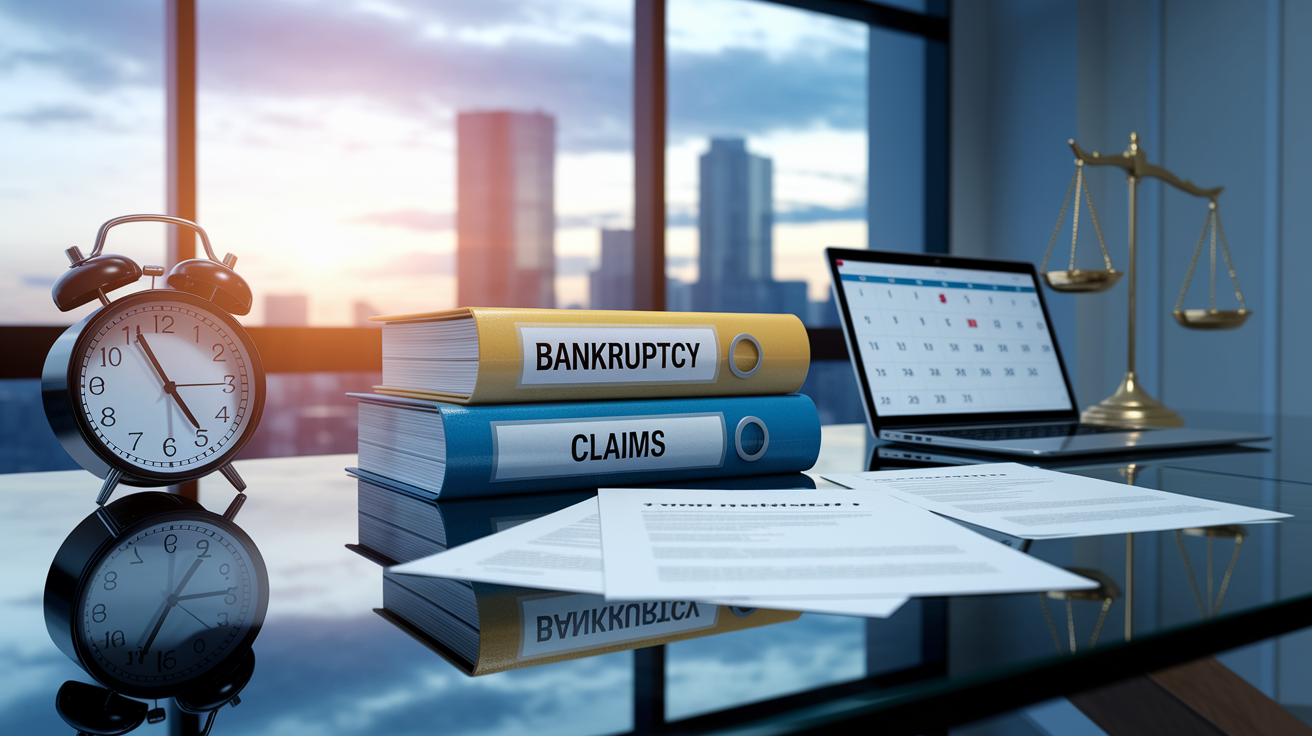
The first 24 to 72 hours after a bankruptcy filing can decide whether you have any shot at recovery or tax planning. Court deadlines start ticking immediately. Trading status can flip within hours. Wait too long and you’ll miss the window to file claims, lock in your cost basis, or get out strategically.
Bankruptcy triggers automatic stays and procedural clocks. Shares usually stop trading or get dumped onto over-the-counter markets where liquidity dies. Your broker might freeze new buys or reclassify what you’re holding. Company updates go silent. Court notices become your only real source of info. Moving fast keeps your options open, whether that’s filing a claim, booking a tax loss, or positioning for whatever comes out of reorganization.
Documentation is everything. Courts and the IRS want proof. Your brokerage statements, trade confirmations, cost basis records—these turn into legal evidence if you file a claim or report a capital loss. Incomplete records can kill your recovery rights. Start building your file on day one.
-
Figure out which bankruptcy chapter was filed. Check if it’s Chapter 7 (liquidation) or Chapter 11 (reorganization) using official filings or court dockets. Recovery paths are totally different.
-
Document what you own right now. Write down share count, purchase dates, cost basis, account statements. If the shares go to zero, you need this for taxes.
-
See if trading is halted. Find out whether shares are stopped, delisted, or moved to pink sheets. A trading halt usually means equity holders get nothing.
-
Read everything from the company and the court. Look for creditor meeting notices, bar dates for claims, proposed plans.
-
Call your broker. Ask if your account has restrictions, whether dividend reinvestment is still running, and if you can still trade or transfer.
-
Stop buying more. Adding to a bankrupt position almost never works. Don’t chase hype on message boards.
Understanding Bankruptcy Chapters and How They Affect Investors

Chapter 11 and Chapter 7 are the two main types, and they produce wildly different outcomes. Chapter 11 is reorganization. The company keeps operating under court watch, negotiates with creditors, and tries to propose a plan that cuts debt or restructures. Timelines run six months to two years. The company might come out with new equity, new debt, or get sold. Existing shareholders rarely keep anything meaningful. Sometimes a plan tosses old equity holders a small amount of new stock or warrants. Not common.
Chapter 7 is liquidation. Assets get sold, proceeds go to creditors in order, and the company disappears. For shareholders, Chapter 7 almost always means total loss. Liquidation value rarely covers even the secured and unsecured creditor claims, so nothing’s left for equity.
Recovery depends on the chapter. In Chapter 11, bondholders and institutional creditors might get new securities, cash, or a mix worth 30 to 70 cents on the dollar, depending on what assets back the claims and how negotiations go. Shareholders are last in line and usually get wiped out or diluted to nothing when creditors receive new equity. In Chapter 7, expect zero. Proceeds go to lenders, vendors, bondholders first. The filing type tells you whether to watch for a reorganization or just prepare to book a total loss.
| Bankruptcy Chapter | What Happens to the Company | Typical Outcome for Investors |
|---|---|---|
| Chapter 11 | Reorganization; company keeps running under court supervision, proposes debt reduction plan | Bondholders may recover partial value; shareholders usually diluted heavily or canceled |
| Chapter 7 | Liquidation; assets sold, company dissolved | Shareholders almost always get nothing; unsecured creditors may recover small percentage |
| Pre-packaged Chapter 11 | Creditors agree to plan before filing; faster reorganization, often weeks to months | Equity frequently canceled; creditors receive negotiated securities or cash |
Creditor Hierarchy and Why Shareholders Are Last

Bankruptcy law sets a strict payment order. Where you sit determines what you can realistically expect. Secured creditors come first. They hold liens on specific assets like property, equipment, inventory. They get paid up to the value of their collateral. Administrative expenses come next (court costs, trustee fees, post-filing trade claims). Then priority unsecured claims like certain taxes and employee wages. General unsecured creditors follow (most bondholders, suppliers, other lenders). Preferred shareholders come after all debt claims. Common shareholders stand last.
For common equity, this means you only see recovery if all higher-priority claims get paid in full. Rare in distressed situations. Even in a successful Chapter 11, the new equity usually goes to creditors as part of their recovery, which dilutes or cancels existing shares. If liabilities exceed asset value (common in bankruptcy), nothing’s left for shareholders once creditors take their cut.
- Secured creditors get first claim on collateral. Often recover close to 100% if the asset value covers the debt.
- Unsecured creditors include general bondholders, trade vendors, lenders without collateral. Recovery rates swing between 10 and 50 cents on the dollar, sometimes zero.
- Preferred shareholders receive stated dividends ahead of common. Paid after all debt but before common equity.
- Common shareholders are last. Frequently get nothing. Occasionally small amounts of new equity or warrants in reorganization plans.
How to File a Claim and What Investors Need to Submit

If you hold bonds or count as a creditor (not typical for common shareholders), you may need to file a proof of claim to get anything. Courts set a “bar date,” the deadline to submit claims, usually 60 to 120 days after filing. Miss it and you forfeit your recovery rights. The claim form is Official Form 410. You can find it on the bankruptcy court’s website or the company’s restructuring site if they publish one.
-
Find the bar date. Check official court notices mailed to creditors or posted on the docket. Calendar it immediately.
-
Fill out Official Form 410. Include your name, address, claim amount (principal, accrued interest, fees), basis for the claim, and supporting attachments like purchase confirmations and account statements.
-
Attach proof. Brokerage statements showing bond holdings, CUSIP numbers, indenture agreements, any correspondence confirming the debt or security.
-
File with the court. Submit electronically if the court uses CM/ECF or mail hard copies to the address on the notice. Keep proof of filing (confirmation receipts, tracking numbers).
-
Watch for objections. Monitor the court docket for challenges to your claim or requests for more documentation. Respond fast to avoid getting tossed.
Equity holders don’t usually file claims because common stock isn’t a creditor position. If the reorganization plan offers equity holders something (rare), the company or court will notify you. Don’t file a proof of claim unless you’re a bondholder, preferred shareholder, or hold another creditor-type security.
Evaluating Recovery Likelihood and Post‑Bankruptcy Share Trading

Figuring out recovery means looking at asset value versus total liabilities and knowing where you sit in the creditor stack. If secured debt alone exceeds the company’s estimated enterprise value, unsecured creditors and shareholders get little or nothing. Court filings and disclosure statements often include valuation analyses or liquidation estimates. Read them carefully. Proposals for debtor-in-possession financing or stalking-horse bids signal some going-concern value, which improves creditor recoveries but rarely touches equity. If the balance sheet shows negative book value and minimal unencumbered assets, equity is worthless.
Post-bankruptcy shares may keep trading on over-the-counter markets or pink sheets, but these trades are speculative and risky. Prices often drop to pennies. Liquidity vanishes. Buyers in these markets are betting on a reorganization surprise or hoping to flip short-term volatility. For long-term investors, holding or buying bankrupt equity only makes sense if a credible reorganization plan explicitly gives new equity to old shareholders. Rare outcome. Most post-bankruptcy trading is noise, not signal. If shares lose their exchange listing and move to pink sheets, treat that as a strong sign of zero or near-zero recovery for common stock.
Tax‑Loss Harvesting and Reporting Rules After a Bankruptcy

When a security becomes worthless, the IRS lets you claim a capital loss in the tax year worthlessness happens. For bankruptcy, worthlessness is typically established when a court confirms a reorganization plan that cancels existing shares, when a Chapter 7 liquidation wraps up with no distribution to shareholders, or when shares are delisted and trading stops with no prospect of value. You report the loss on Schedule D using the last day of the tax year as the sale date, even if you technically still hold the shares. Document the event with court filings, brokerage statements, news confirming the cancellation or delisting.
Capital losses offset capital gains dollar for dollar. If losses exceed gains, you can deduct up to $3,000 per year against ordinary income and carry forward the rest indefinitely. Timing can matter. If you expect higher capital gains next year, think about whether deferring the worthless-security claim makes sense (if rules allow), though most investors prefer to take the loss as soon as legally possible. Talk to a tax advisor to confirm the exact year of worthlessness and proper reporting, especially if the bankruptcy crosses multiple calendar years.
- Keep detailed records. Court filings showing cancellation or plan confirmation, brokerage statements showing zero value, correspondence from the company or exchange about delisting.
- Report in the right tax year. Worthlessness gets determined by the year the security loses all value, not the year you bought it or the year you decide to sell.
- Watch for reorganization securities. If you get new stock or warrants in a plan, that might trigger a taxable exchange or defer loss recognition. Track basis in any new securities separately.
Common Mistakes Investors Make During Corporate Bankruptcies

Investors often react emotionally or don’t understand the bankruptcy process. That leads to costly mistakes. Panic selling at the worst moment, speculative buying of worthless shares, missing critical deadlines. All of it drains portfolios. Understanding the process and avoiding these traps preserves capital and squeezes out any remaining recovery.
- Panic selling quality holdings while clinging to bankrupt ones. Investors sometimes dump unrelated, healthy positions to offset losses when the right move is to harvest the bankrupt holding’s loss and keep quality assets.
- Buying post-filing shares hoping for a turnaround. Post-bankruptcy equity trades at pennies because it’s usually going to zero. These aren’t “cheap buying opportunities.” They’re highly speculative bets with near-certain losses.
- Missing the bar date for claims. If you’re a bondholder or creditor and don’t file by the court deadline, you forfeit your right to participate in any distribution or plan vote.
- Thinking trading activity means recovery. Just because shares still trade doesn’t mean they have value. Volume and price movement post-filing are usually driven by speculation, not fundamentals.
- Ignoring tax-loss harvesting timing. Wait too long to realize a loss or sell in the wrong tax year and you can lose deductions. Plan the timing of sales or worthlessness claims to get the tax benefit.
Final Words
Act fast: verify the bankruptcy chapter, stop adding money, and document your holdings. Check whether trading is halted and contact your broker within 24–72 hours.
Remember shareholders are low in the repayment order—file a proof of claim by the bar date, think about tax‑loss harvesting, and avoid speculative buys or missed deadlines.
For a quick checklist on company bankruptcy filing what investors should do, follow these steps and get professional help if unsure — you’ll be better positioned to protect what you can.
FAQ
Q: Should you invest in a company that filed bankruptcy?
A: Investing in a company that filed bankruptcy is generally risky and not recommended for most investors. Only consider a small, informed stake if it’s Chapter 11 with a credible reorganization plan and clear recovery path.
Q: What is the 180 rule in bankruptcy?
A: The 180 rule in bankruptcy refers to no single universal rule; in practice some courts or statutes use a 180‑day timeframe for claims, preferences, or automatic‑stay exceptions — check the specific statute or ask counsel.
Q: Should I sell my stock if a company files Chapter 7?
A: Selling stock after a company files Chapter 7 is usually wise: liquidation typically leaves common shareholders with little or nothing, so selling any tradable shares quickly can salvage value and stop further losses.
Q: What is the 90 day rule for Chapter 7?
A: The 90 day rule for Chapter 7 lets the trustee recover (claw back) preferential transfers to non‑insider creditors made within 90 days before filing; transfers to insiders have a one‑year lookback instead.