


Are share buybacks the stock market’s shortcut to higher prices?
When a company announces a buyback, shares often jump in hours or days as investors price in EPS gains and added demand.
But that initial pop isn’t the whole story.
The market impact of buyback announcements depends on program size, firm health, and timing — and long-term returns hinge on whether buybacks are done at sensible prices and followed through.
This piece breaks down typical price reactions, volume and liquidity effects, and when buybacks actually boost shareholder returns.
Immediate Market Reaction to Buyback Announcements
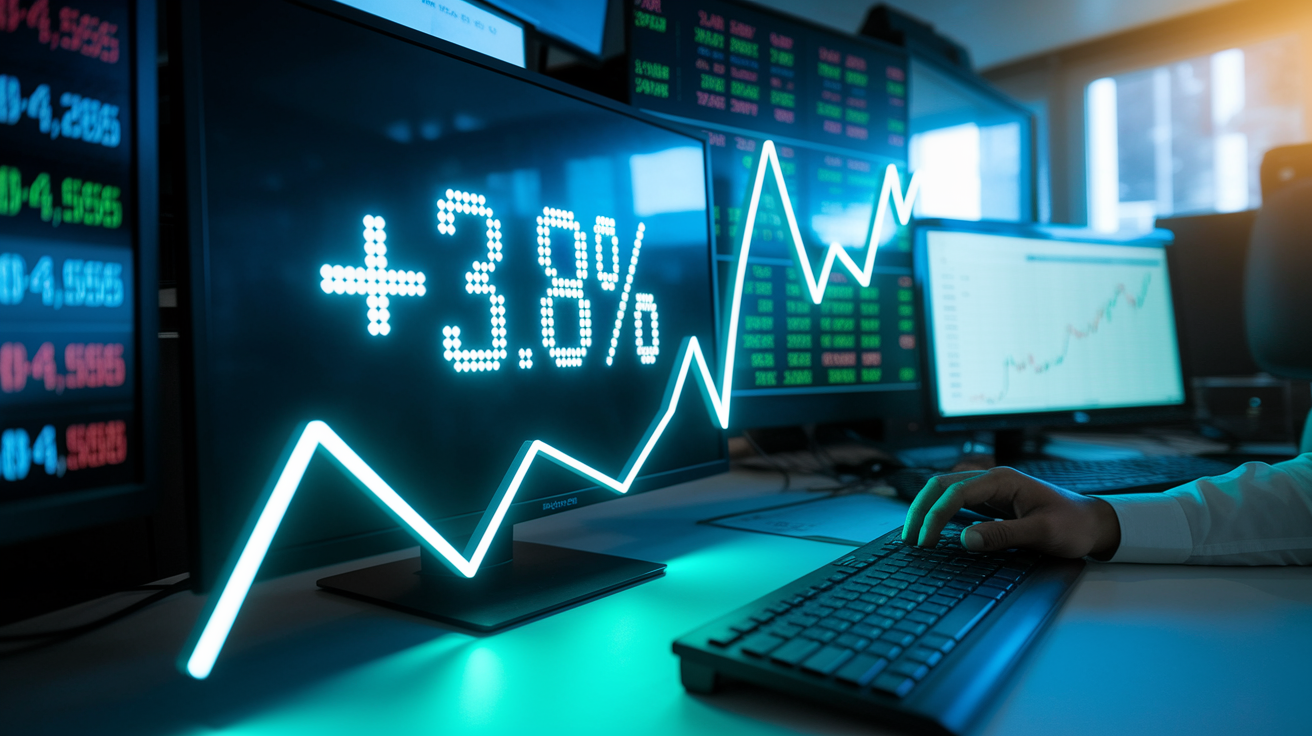
Share prices usually jump within hours or days after a company announces a buyback. Historical patterns show average gains around 2 to 3 percent in the first session, with bigger programs often pushing the move higher. When a major tech company disclosed a $100 billion repurchase authorization in 2018, shares popped 3.8 percent at the open. Investors read the program as management saying the stock was too cheap.
Markets digest the message fast. Buybacks shrink the share count, which lifts earnings per share even if total profit doesn’t budge. Investors price in that EPS boost right away, plus the demand the company will add when it starts buying. The announcement also tells you management thinks internal projects don’t offer better returns than buying back stock, or that returning cash now beats holding it.
Five reasons markets typically react well in the short run:
- Perceived undervaluation – Management spending cash on its own stock signals they think the price is below what it’s worth.
- EPS accretion – Fewer shares outstanding means higher per-share earnings, which can support valuation and returns.
- Confidence signaling – Buybacks reflect optimism about future cash flow and financial health.
- Added demand – The company becomes a buyer, creating price support and absorbing sellers.
- Capital allocation focus – Suggests disciplined use of cash instead of chasing low-return projects or hoarding reserves.
Larger programs relative to market cap get stronger reactions. A $10 billion buyback for a $200 billion company won’t excite investors as much as the same amount announced by a $50 billion firm, since the impact on share count is bigger in the smaller case.
Medium and Long-Term Effects on Valuation and Performance

Past the announcement window, buyback programs shape valuation through sustained EPS growth and capital structure shifts. As the company executes over months or years, the shrinking share count lifts reported EPS even if business performance stays flat. This can support higher valuation multiples if investors believe the trend reflects smart capital allocation. Research shows meaningful price effects often show up only after two years, once the cumulative share reduction and management’s sustained commitment become clear.
Long-term outcomes depend heavily on timing and what else the company could’ve done with the cash. Firms that buy shares when valuations are low create value for remaining shareholders by retiring equity at a discount. Companies that announce programs near profit peaks and high multiples risk destroying value, buying back shares at inflated prices and often pulling back when markets drop and bargains appear. Studies show mixed long-term returns, with outperformance concentrated among firms that time buybacks well and keep strong free cash flow.
The alternative use of capital matters. If a company picks buybacks over reinvestment in profitable projects, growth can slow and total returns may lag competitors who put cash into expansion, research, or acquisitions that beat the cost of capital. Investors weigh whether the firm truly lacks good internal opportunities or if buybacks mainly boost near-term metrics and executive comp tied to EPS targets. When fundamentals weaken after a buyback, the initial price pop can reverse.
Trading Volume and Liquidity Reactions
Buyback announcements usually trigger a sharp volume spike on the day of the news and the session right after. Higher volume reflects both institutional repositioning and retail interest as investors rethink fair value. The increase can range from 50 to 200 percent above the stock’s 20-day average daily volume, depending on program size and company profile.
Liquidity effects vary. Open-market buybacks executed over time can improve liquidity by providing steady demand, tightening bid-ask spreads during quiet or stressed periods. Tender offers, which invite shareholders to sell at a fixed premium in a narrow window, can temporarily reduce liquidity as large blocks get pulled quickly. Short-term volatility often rises right after the announcement as traders adjust, options markets reprice, and algorithms react.
Common market responses include:
- Volume surge on announcement day as news spreads and positions get rebalanced.
- Bid-ask spread tightening once the company starts buying, adding liquidity.
- Temporary volatility increase as price discovery happens and investors update fair-value estimates.
- Order-flow shifts toward buy-side imbalance in the hours following, driving upward momentum.
Key Variables that Determine Market Impact

The size of a stock’s reaction correlates closely with the program’s size relative to market cap. A repurchase representing 5 to 10 percent of shares outstanding gets more attention and stronger price response than a token 1 percent authorization. Larger programs signal both financial capacity and serious commitment, boosting investor confidence that the buyback will affect per-share metrics and capital structure.
Firm characteristics shape reaction intensity. Small-cap and mid-cap companies often see percentage gains double or triple those of large-cap peers announcing similar relative programs. Smaller stocks have less analyst coverage, lower liquidity, and higher information asymmetry. A surprise buyback from a small firm can shift sentiment hard, while the same relative announcement from a mega-cap meets a quieter response due to higher baseline expectations. Financial health also matters. Firms with strong balance sheets, consistent free cash flow, and low leverage inspire more trust that buybacks reflect genuine undervaluation rather than a defensive move to prop up a falling stock.
Broader market conditions influence how buyback news lands. Announcements during bull markets or low volatility tend to produce smaller immediate moves because investors already price in optimism and capital returns. During bear markets or stress, buyback announcements can generate outsized reactions as they signal resilience and provide price support when sentiment is weak. Timing within the earnings cycle also plays a role. Buybacks disclosed alongside strong quarterly results and raised guidance amplify positive momentum, while programs announced without fundamental improvement raise questions about whether management is masking weakness.
| Variable | Influence on Reaction |
|---|---|
| Program size (% of market cap) | Larger relative programs drive stronger immediate price gains and higher investor attention. |
| Firm size (market cap) | Small-caps show bigger percentage reactions; large-caps react more modestly due to scale and coverage. |
| Financial health (leverage, cash flow) | Strong balance sheets increase credibility of undervaluation signal; weak financials raise skepticism. |
| Market conditions (cycle phase) | Buybacks announced in downturns or stress periods generate larger reactions; bull-market announcements are more muted. |
| Timing (earnings release) | Announcements paired with positive earnings and guidance produce amplified moves; standalone announcements face more scrutiny. |
Signaling Theory and Market Interpretation
Buyback announcements send a strong signal that management thinks the company’s shares trade below intrinsic value. Because executives know more about future prospects, cash flows, and competitive positioning than outside investors, the decision to spend capital on repurchasing equity instead of holding cash or pursuing acquisitions shows confidence in the business and doubt about the market’s current valuation. Markets read this insider view as a credible indicator of undervaluation, especially when the firm has a track record of disciplined capital allocation and transparent communication.
The strength of the signal depends on how much financial flexibility the company keeps after committing to the buyback. Firms with ample free cash flow, low debt, and stable earnings can announce large programs without raising worries about liquidity or stress. Companies that finance buybacks by adding leverage or cutting investment budgets send a weaker or even negative signal, as investors worry that short-term EPS manipulation trumps long-term value creation. Credibility also hinges on management’s history. Serial announcers who regularly authorize programs but execute slowly or inconsistently erode trust, while firms that follow through on prior commitments and time repurchases well build reputations that magnify future announcement effects.
Credibility of the Signal
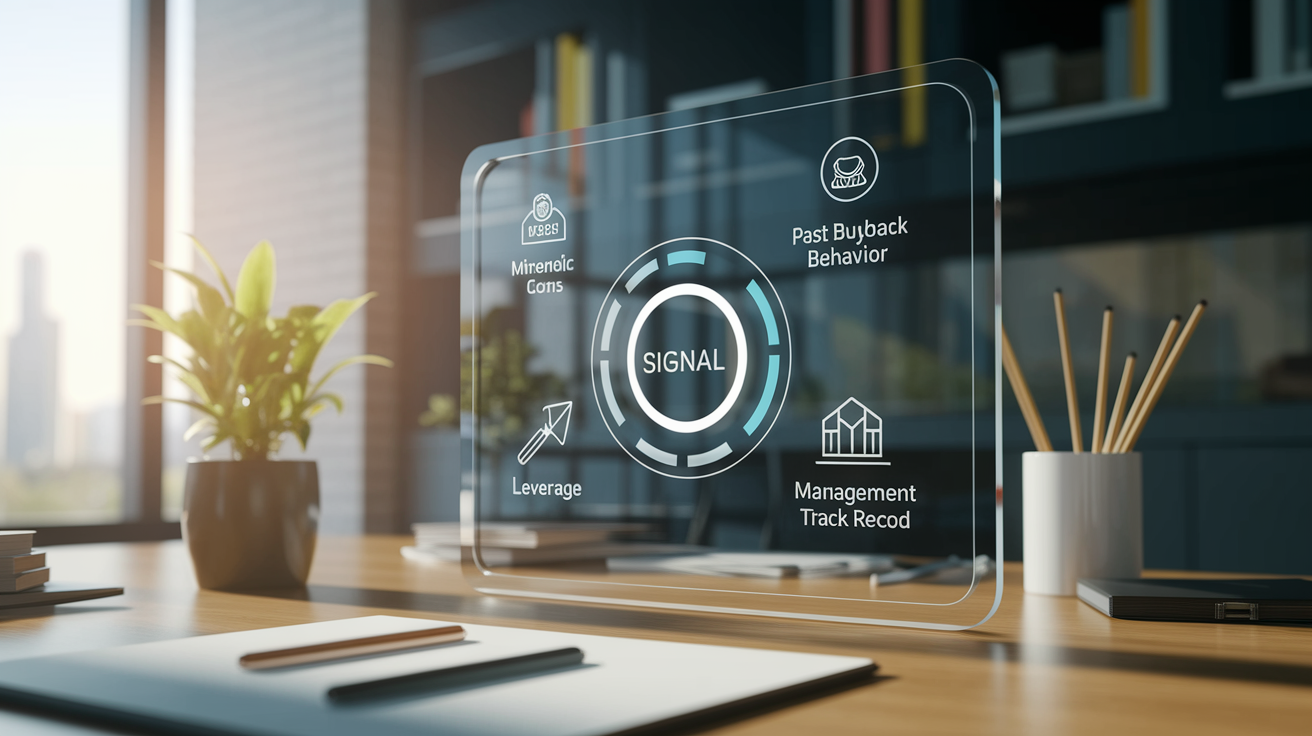
Investor trust in a buyback signal depends on three things. First, the company’s leverage profile. Firms with debt-to-equity ratios below industry averages and strong interest coverage inspire confidence that the repurchase reflects genuine undervaluation rather than balance-sheet strain. Second, past buyback behavior. Consistent execution of prior programs at reasonable prices shows management skill and reinforces the signal, while a pattern of announcing large programs that stay mostly unused or get executed at market peaks damages credibility. Third, management’s track record on capital allocation. Executives who’ve delivered strong returns on invested capital, made smart acquisitions, and communicated clearly about strategy earn higher investor trust. When these three elements align, markets treat the buyback announcement as a high-conviction undervaluation signal and price in larger and more durable gains.
Historical Case Studies from Major Companies
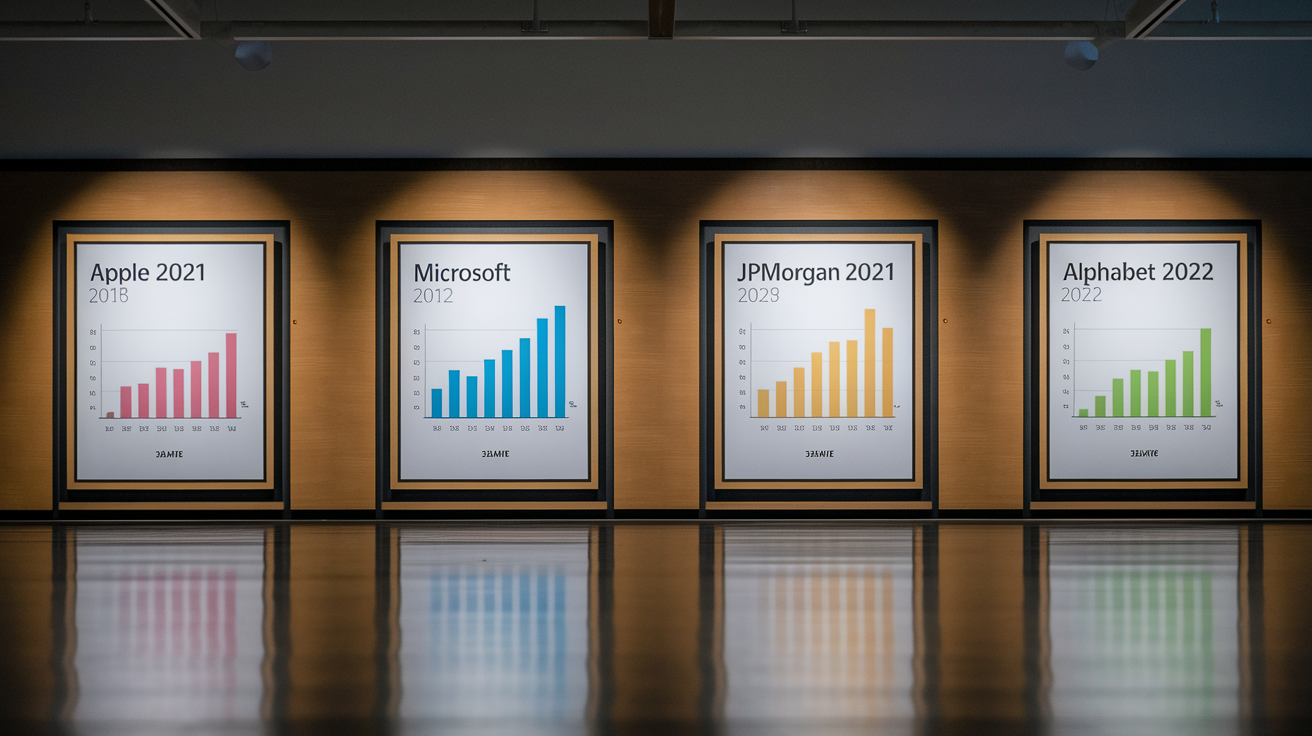
Apple’s announcement of a $100 billion buyback expansion in May 2018 produced a 3.7 percent rally in the first session. Investors viewed the program, the largest in corporate history at the time, as confirmation that management saw real value in the stock after a period of volatility. The company had already executed tens of billions in prior repurchases and paired the announcement with strong quarterly earnings and guidance, amplifying the reaction. Over the next twelve months, Apple cut its share count by more than 4 percent, supporting steady EPS growth and contributing to a sustained rally that took the stock to record highs.
Microsoft’s $60 billion buyback authorization in September 2021 drove an immediate 2.1 percent gain as the tech giant signaled confidence despite concerns about post-pandemic growth deceleration. The announcement came alongside a dividend increase and during a period when Microsoft’s free cash flow stayed robust, reinforcing the credibility of the capital-return plan. The market read the move as evidence that management believed the stock offered attractive long-term value even as competition in cloud computing intensified.
JPMorgan Chase disclosed a $30 billion repurchase program in June 2021 following the Federal Reserve’s annual stress test clearance, triggering a 1.8 percent pop. The announcement highlighted the bank’s capital strength and willingness to return excess reserves to shareholders rather than pursue aggressive loan growth in a low-rate environment. The reaction was quieter than tech peers due to regulatory constraints and sector-specific capital requirements, but the buyback still provided support during a period of banking-sector uncertainty.
| Company | Announcement Year | Program Size | Immediate Reaction |
|---|---|---|---|
| Apple | 2018 | $100 billion | +3.7% first session |
| Microsoft | 2021 | $60 billion | +2.1% first session |
| JPMorgan Chase | 2021 | $30 billion | +1.8% first session |
| Alphabet | 2022 | $70 billion | +3.2% first session |
Alphabet’s $70 billion buyback unveiled in April 2022 delivered a 3.2 percent gain as the market welcomed renewed capital discipline following a period of elevated spending on moonshot projects and regulatory headwinds. The announcement coincided with first-quarter earnings that beat expectations, and investors read the buyback as a signal that management was confident in the core advertising business despite macroeconomic uncertainty and rising interest rates.
Final Words
Shares often jump on buyback news, with a quick 2–3% lift on average, and trading volume typically spikes as investors and algos reposition.
Over weeks and months the picture changes — EPS mechanics, capital-allocation choices, program size, and management credibility drive longer-term results. Case studies show both strong rallies and muted moves depending on market conditions.
Understanding share buyback announcement market impact helps you separate short-term noise from meaningful signals and spot who’s likely to benefit next. Stay tuned to follow-through and cash-flow updates.
FAQ
Q: What happens to share prices after a buyback announcement?
A: Share prices often rise after a buyback announcement, typically gaining about 2–3% in the days after; larger programs and perceived undervaluation usually drive bigger immediate moves.
Q: How do stock buybacks affect the market?
A: Stock buybacks affect the market by reducing share float, boosting EPS, prompting short-term price gains, and altering liquidity and trading volume; the overall impact depends on program size, timing, and sentiment.
Q: Is a share buyback good news?
A: A share buyback can be good news when it signals undervaluation, strong cash flow, or disciplined capital allocation; it’s less positive if it masks weak growth or increases leverage.