


Think you can ignore Apple’s earnings date? That’s risky if you own the stock or trade tech.
Apple confirmed Q2 2026 results will be released after the market close on Thursday, April 30, 2026.
After-hours timing usually means most of the price action shows up in extended trading or the next morning.
This intro lays out the confirmed Apple earnings date, the likely call window, the numbers and commentary that will move the tape (iPhone units, Services, margins, guidance), and exactly where to watch so you can plan your next move.
Upcoming Apple Earnings Date and Official Release Details

Apple’s next earnings drop is set for Thursday, April 30, 2026. The company’s reporting fiscal Q2 2026 results after the market closes. The date is CONFIRMED, so this isn’t a third-party guess. Apple always releases Q2 numbers in late April, covering the January through March stretch—the quiet period between holiday sales and the fall product cycle.
The release hits after the closing bell, which means the press release and all the financial tables go out once regular trading wraps up. Apple usually follows with a conference call around 2:00 p.m. Pacific (5:00 p.m. Eastern), but the exact time and webcast link aren’t posted yet. You’ll want to keep an eye on the Apple Investor Relations “Events & Presentations” page for the official call time, dial-in info, and webcast URL once Apple publishes everything. After-hours announcements mean most of the action happens in extended trading or the next morning.
| Date | Fiscal Quarter | Time of Day | Status |
|---|---|---|---|
| April 30, 2026 | Q2 2026 | After Market | CONFIRMED |
| January 29, 2026 | Q1 2026 | After Market | Historical |
| October 30, 2025 | Q4 2025 | After Market | Historical |
| July 31, 2025 | Q3 2025 | After Market | Historical |
Apple’s earnings calendar data goes back to 2006, giving a solid baseline for predicting future dates. The proprietary forecasting algorithm uses that history to project upcoming announcements when Apple hasn’t officially locked in a date yet. For April 30, 2026, CONFIRMED means Apple’s made it official. When you see dates further out without that status, those are educated guesses based on Apple’s long-term pattern.
Apple Quarterly Earnings Schedule and Fiscal Timing Patterns
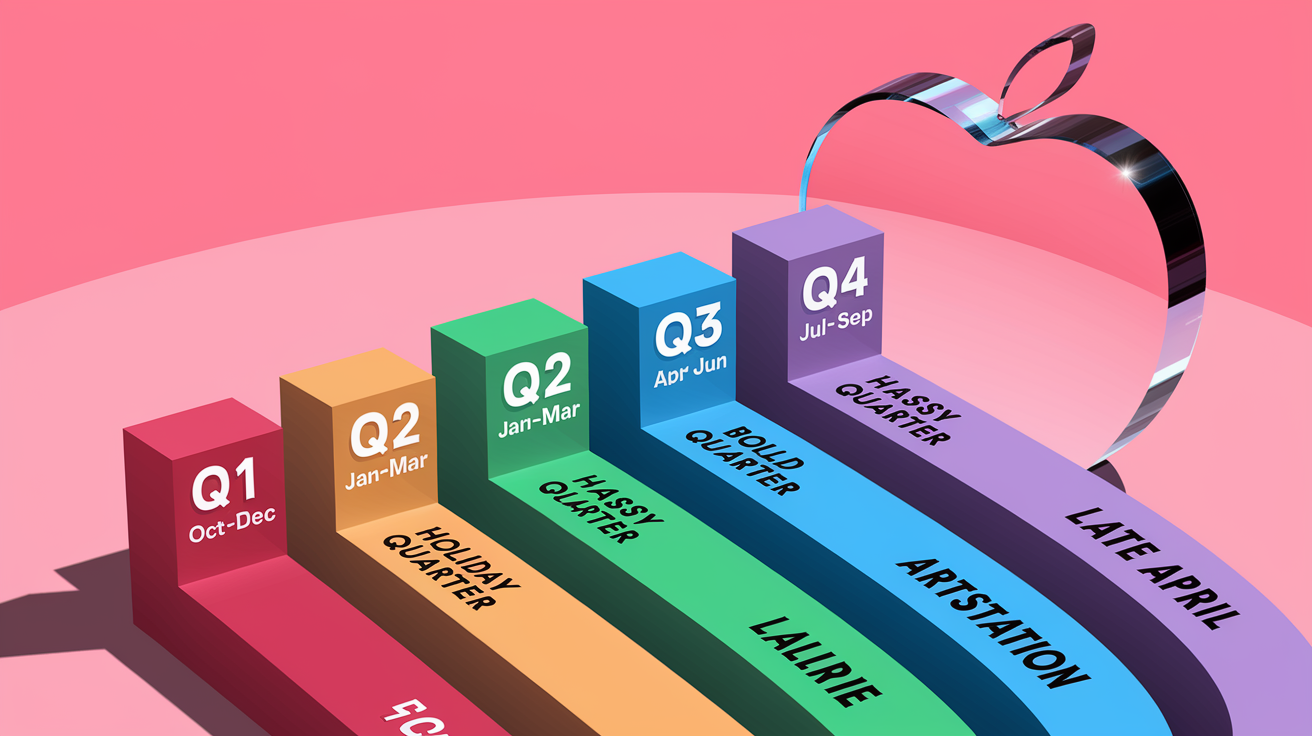
Apple’s fiscal year wraps in late September, so the reporting calendar doesn’t line up with the regular calendar year. Fiscal Q1 runs October through December—that’s the holiday quarter—and results usually come out in late January or early February. Fiscal Q2 covers January through March, announced in late April. Fiscal Q3 is April through June, announced in late July. Fiscal Q4 goes July through September, announced in late October. This cadence repeats every year, so you can plan ahead pretty easily.
The fiscal structure matters because Apple’s “first quarter” is the holiday shopping blitz, not the typical January start. Q1 almost always posts the highest revenue and earnings of the year, driven by iPhone sales during November and December. Understanding that offset is critical when you’re comparing Apple to calendar-year companies or reading analyst notes that reference “the holiday quarter.”
Here’s how Apple’s seasonal rhythm plays out:
Fiscal Q1 (Oct–Dec) gets announced in late January or early February. It’s the holiday quarter with peak revenue. Fiscal Q2 (Jan–Mar) drops in late April—post-holiday sales typically dip sequentially. Fiscal Q3 (Apr–Jun) comes in late July, covering spring product launches and back-to-school prep. Fiscal Q4 (Jul–Sep) lands in late October, capturing the new iPhone launch in September.
Seasonality drives both the numbers and what Wall Street expects. Analysts build in higher gross margins and stronger Services growth during Q1, then dial back forecasts for Q2 as unit volumes return to normal. Q3 and Q4 usually bring new product announcements that set up the next holiday cycle, so the guidance commentary during those calls carries extra weight.
Apple Earnings History and Past Announcement Dates

Apple’s historical earnings dates follow a tight pattern—late-month releases, usually in the final full week of January, April, July, and October. The dataset covers earnings from 2006 to now, giving analysts over 60 quarterly reports to work with. That’s a reliable baseline for projecting future dates when Apple hasn’t confirmed the exact day yet. The one-year historical table tracks the most recent four quarters, offering a quick reference for recent timing and any schedule quirks.
What’s missing from the historical data? The specific clock times for each release and conference call. Apple’s historically scheduled most calls around 2:00 p.m. Pacific (5:00 p.m. Eastern), but that’s not set in stone every quarter. The absence of exact call times in the data means you should double-check the webcast start time on Apple’s Investor Relations page or the 8-K filing posted on announcement day. The historical table does show “After Market” timing, confirming all recent releases have come after the regular session closes—something Apple’s stuck with for years.
| Date | Fiscal Quarter | Time of Day |
|---|---|---|
| January 29, 2026 | Q1 2026 | After Market |
| October 30, 2025 | Q4 2025 | After Market |
| July 31, 2025 | Q3 2025 | After Market |
| April 24, 2025 | Q2 2025 | After Market |
| January 30, 2025 | Q1 2025 | After Market |
| October 31, 2024 | Q4 2024 | After Market |
Consistent timing helps analysts finalize their estimates with confidence. When you know Apple’s going to report Q2 results in the last week of April, you can lock in estimates in early April and adjust based on supply-chain data, channel checks, and any product-launch commentary leading up to the release. The predictable calendar also helps options traders price implied volatility and structure event-driven positions with clear expiration targets. Any break from the pattern—early or delayed—usually points to scheduling around a product event or some regulatory filing deadline.
Apple Earnings Estimates, EPS Expectations, and Analyst Forecast Trends
Apple’s consensus earnings-per-share and revenue estimates get updated daily by major data providers as analysts tweak forecasts based on fresh product data, supply-chain reports, foreign-exchange swings, and broader consumer-spending signals. The company’s trailing-twelve-month financials set a high bar: Apple’s got a market cap near $4.0 trillion, with LTM revenue of $436 billion, LTM operating profit of $141 billion, and LTM net income of $118 billion. Those figures mean even tiny percentage changes in revenue or margins can shift quarterly profit by billions.
Historical post-earnings price action shows Apple’s stock moved higher on the first trading day after earnings in about 42 percent of releases over the past five years—eight positive one-day returns versus eleven negative. The median positive one-day return is +4.0 percent, while the median negative one-day return sits at -1.3 percent. Using only the last three years, the positive hit rate drops to roughly 33 percent, pointing to tougher recent quarters. That volatility reflects how sensitive the market is to guidance tweaks, especially around iPhone unit expectations and Services revenue growth.
Analysts typically zero in on five core areas when modeling Apple’s earnings:
Consensus EPS estimate gets updated daily as new research notes publish. Revenue expectations include total quarterly revenue and year-over-year percentage change, broken out by iPhone, Services, Mac, iPad, and Wearables. Year-over-year comparisons track growth rates for revenue and EPS versus the same quarter last year, adjusted for foreign-exchange swings. Gross margin and operating margin assumptions reflect product mix (higher-margin Services versus lower-margin hardware) and supply-chain cost trends. Guidance themes cover the next quarter and full fiscal year, including any commentary on product cycles, regulatory headwinds, or macro conditions.
Wall Street price targets and EPS revisions tend to cluster in the two weeks before earnings, as analysts finalize models and adjust for last-minute data. The five-year and three-year historical return data show Apple’s stock swings hard around earnings, making the event a key risk and opportunity window for both long-term holders and short-term traders. Correlation between one-day, five-day, and 21-day returns matters to event-driven traders—if a positive one-day move historically leads to sustained momentum over five days, that pattern can shape short-term positioning.
Apple Earnings Call Details, Transcripts, and Management Commentary

Apple’s earnings call usually kicks off shortly after the press release and financial tables go live. The call typically starts around 2:00 p.m. Pacific (5:00 p.m. Eastern), though the exact time and webcast link get posted on the Apple Investor Relations “Events & Presentations” page once the schedule’s confirmed. You can tune in via the Apple Investor Relations site, and the company archives the audio replay and full transcript within a few hours. Transcripts also pop up on major financial data platforms and transcript services soon after the call wraps.
The call follows a predictable structure. CEO Tim Cook and CFO Luca Maestri open with prepared remarks covering overall results, segment performance, and strategic updates. Cook usually talks about product momentum, customer satisfaction, and the installed base of active devices. Maestri walks through revenue and margin details, foreign-exchange impacts, and the capital-return program. After the prepared section, the call opens for analyst Q&A. Sell-side analysts ask about guidance assumptions, product-cycle timing, Services growth drivers, and macro headwinds. The Q&A portion often runs 30 to 45 minutes and gives the most granular look at forward expectations.
Typical Apple Call Structure
Apple’s call structure stays consistent quarter to quarter. The call opens with a brief disclaimer on forward-looking statements, then Cook jumps into the quarter’s highlights and any strategic announcements. Maestri follows with a detailed breakdown of revenue by segment, gross margin trends, operating expenses, tax rate, and share count. Both executives discuss guidance for the upcoming quarter, including expected revenue ranges and any known headwinds or tailwinds. The Q&A covers topics that shift by quarter—holiday demand and iPhone mix during Q1, Services growth and margin expansion during Q2 and Q3, and product-launch timing during Q4. Analysts also dig into foreign-exchange sensitivity, supply-chain constraints, and the competitive picture in key markets like China.
Transcripts and replay links show up on the Apple Investor Relations site under “Quarterly Results” shortly after the call ends. Most financial news platforms and market data terminals publish full transcripts within a few hours. The archived webcast stays available indefinitely, so you can go back and review management commentary from earlier quarters when you’re analyzing trends or checking guidance accuracy.
Market Reaction to Apple Earnings and Trading Considerations

Apple’s stock usually sees big volatility around earnings, fueled by the company’s size, share liquidity, and heavy retail and institutional ownership. Historical data covering 19 earnings over the past five years show the stock moved higher on the first trading day after earnings eight times and lower 11 times. That 42 percent positive rate over five years drops to roughly 33 percent using only the last three years, so recent quarters have skewed more negative. The median positive one-day return is +4.0 percent, the median negative one-day return is -1.3 percent—a meaningful gap that shows how fast sentiment can flip based on guidance and segment trends.
After-market releases change how traders react. Because Apple reports after the regular session, the initial price move happens in extended-hours trading, which typically has lower volume and wider spreads. Overnight gaps can be big, and pre-market trading the next morning often brings more liquidity as institutional desks adjust positions. The after-market timing means options strategies like straddles and strangles have to factor in overnight theta decay and the risk that implied volatility collapses before the regular session reopens.
Correlation between one-day, five-day, and 21-day post-earnings returns is key for event-driven traders. If history shows a tight correlation between the one-day move and the five-day move, a positive one-day reaction might signal a short-term long trade with a five-day hold. On the flip side, if the one-day and 21-day moves are weakly correlated, a quick reversal is more likely, favoring mean-reversion plays. The data suggest checking these correlations, but specific numbers aren’t provided, so you’ll want to run your own analysis using historical datasets or third-party tools.
Common Earnings-Day Market Behaviors
Apple’s size and liquidity create several recurring patterns around earnings. Implied volatility tends to climb in the week before the announcement as options traders price in the expected move, then collapses right after the release—volatility crush. The expected move (the one-standard-deviation range priced into at-the-money options) often lines up with historical median moves, giving traders a baseline for position sizing. Straddles and strangles are popular for traders expecting a big move in either direction but unsure which way, though volatility crush can eat into gains if the realized move is smaller than the implied move.
Overnight gaps happen all the time, especially when guidance surprises the Street or when a key segment (like iPhone or Services) misses or beats by a wide margin. Risk management for earnings trades usually includes position-sizing rules that cap exposure to a small percentage of capital, stop-loss orders for directional bets, and time-decay awareness for multi-leg options strategies. The after-market release adds complexity, as traders have to decide whether to hold through the overnight session or exit before the close and re-enter in pre-market or at the open.
Five key trading considerations for Apple earnings:
Implied volatility peaks the day before earnings and drops hard after the release, affecting options pricing. Expected move (one standard deviation) is often calculated from at-the-money straddle prices and gives a market-implied range. Straddles and strangles can profit from large moves but need the realized move to beat the cost of the position after volatility crush. Overnight gaps are common with after-market releases, creating liquidity and execution risk in extended hours. Risk management should include position sizing, stop-loss rules, and awareness of how theta decay hits multi-leg options strategies.
Apple Revenue Breakdown and Key Earnings Metrics to Watch
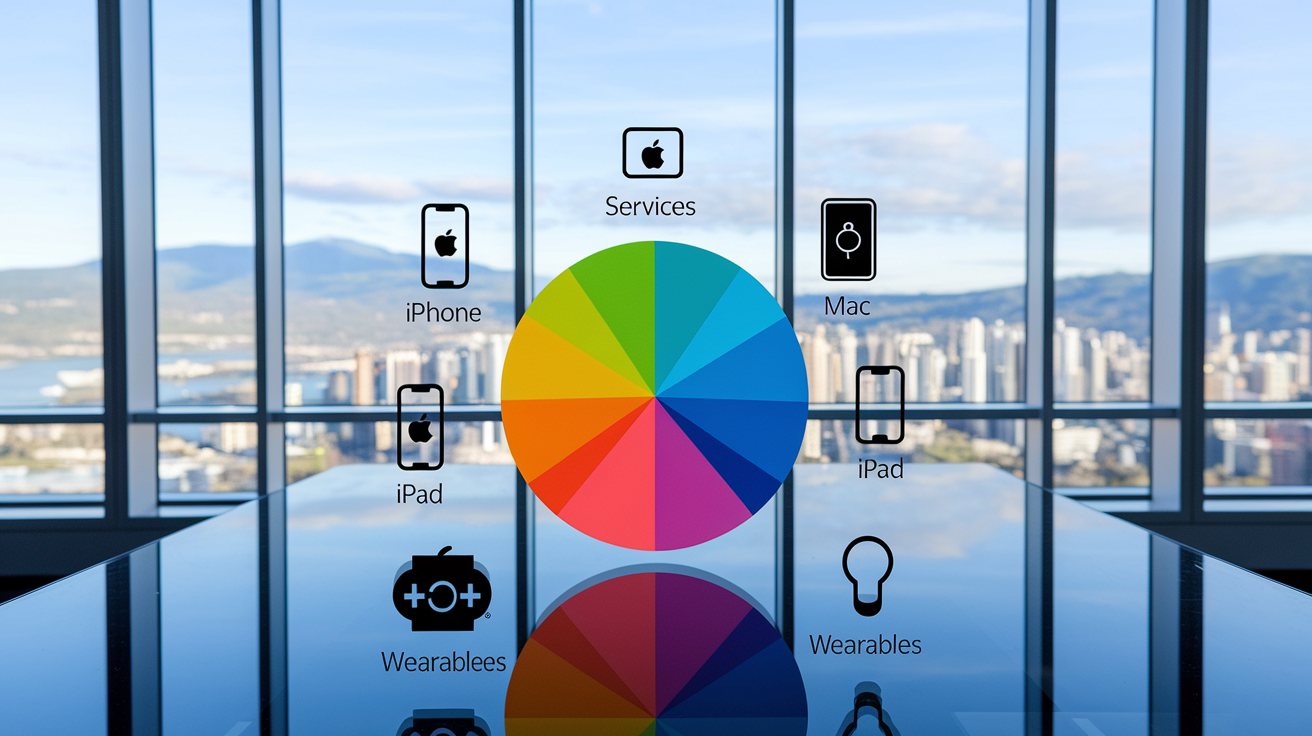
Apple reports revenue across five main segments: iPhone, Services, Mac, iPad, and Wearables (which includes Apple Watch, AirPods, and HomePod). The company stopped breaking out unit sales for iPhone, iPad, and Mac back in 2018, so analysts and investors now track revenue trends, average selling prices (inferred from revenue and market estimates), and geographic performance. Services revenue—covering the App Store, iCloud, Apple Music, AppleCare, and advertising—gets close attention because it carries higher gross margins than hardware and represents more predictable recurring revenue.
Key metrics investors watch during earnings calls include the total number of active devices in the installed base, which Apple defines as devices used in the past 90 days. This figure serves as a proxy for ecosystem scale and Services attachment potential. Management also discusses paid subscriptions across all Services offerings, iCloud storage adoption, and gross margin trajectory by segment. Foreign-exchange headwinds or tailwinds come up often, especially when the U.S. dollar strengthens or weakens against major currencies like the euro, yen, or renminbi, since Apple pulls in a big chunk of revenue outside the U.S.
Six segment metrics investors monitor:
iPhone revenue and year-over-year growth, with geographic breakdowns (Americas, Europe, Greater China, Japan, Rest of Asia Pacific). Services revenue and growth rate, with commentary on App Store performance, iCloud subscriptions, and advertising. Mac revenue, including any impact from new product launches (MacBook Pro, MacBook Air, Mac Studio) and enterprise adoption. iPad revenue, with focus on education and enterprise sales, refresh cycles, and competition from tablets and Chromebooks. Wearables, Home, and Accessories revenue, driven by Apple Watch, AirPods, and other hardware accessories. Active devices in the installed base and total paid subscriptions, which signal ecosystem health and Services growth potential.
Product-mix shifts affect gross margins because hardware segments like iPhone, Mac, and iPad typically carry lower gross margins (30 to 40 percent) than Services (60 to 70 percent). A quarter with strong iPhone revenue but weak Services growth might still disappoint on margin expansion. A quarter with flat iPhone sales but accelerating Services revenue can drive margin improvement and higher operating leverage. Analysts model these mix effects carefully, since even a one-percentage-point shift in Services as a percentage of total revenue can move operating income by several billion dollars annually.
How to Track, Verify, and Set Alerts for Apple Earnings Dates

Confirming Apple’s official earnings date and call time means checking the company’s Investor Relations “Events & Presentations” page, which Apple updates once the schedule’s finalized. The most reliable sources are the Apple IR site, SEC 8-K filings posted on or shortly before the release date, press releases sent via major newswires, and financial-news terminals that pull company announcements. The 8-K filing typically includes the earnings release date, the time of the release, and details about the conference call or webcast, making it your definitive source when the IR site hasn’t updated yet.
Time-zone conversions matter because Apple’s headquarters and typical call times are in Pacific Time, but plenty of investors and analysts work on Eastern Time or other zones. Best practice is to note the event time in both PT and ET, and use calendar tools that automatically adjust for your local time zone. Apple’s earnings calendar data gives you the date and “After Market” timing, but exact clock times (like 2:00 p.m. PT) often aren’t included until Apple publishes the full event details. Add the event to your calendar once the official time’s posted, and set reminders for the press release (usually issued at market close) and the conference call (typically starting 15 to 30 minutes later).
Four steps to confirm and track Apple earnings dates:
Visit the Apple Investor Relations “Events & Presentations” page and look for the upcoming earnings announcement under “Quarterly Results” or the event calendar. Monitor the SEC EDGAR system for an 8-K filing during the expected announcement week—the 8-K will show the release date, time, and webcast details. Subscribe to Apple Investor Relations email alerts or RSS feeds to get automatic notifications when the company posts a new earnings date or press release. Use financial-news alerts from major data providers (Bloomberg, Reuters, FactSet) or brokerage platforms to get real-time push notifications when the press release hits the wire.
Recommended Monitoring Sources
Apple’s Investor Relations page is your primary source for official earnings dates and webcast links. The “Events & Presentations” section lists upcoming and past earnings calls, with links to press releases, financial tables, and archived audio. The SEC EDGAR database works as a backup verification tool, since Apple files an 8-K within four business days of any material event, including earnings announcements. Financial-news wires like PR Newswire and Business Wire distribute Apple’s press releases at the same time, and major market data terminals (Bloomberg Terminal, Refinitiv Eikon, FactSet) pull those releases into their news feeds within seconds.
Calendar integration options include downloading an .ics file (if Apple or a third-party calendar service offers one) and importing it into Google Calendar, Outlook, or Apple Calendar. You can also manually create a calendar event with the date, time, and a link to the Apple IR webcast page, then set a reminder for 15 minutes before the call starts. Email alerts and RSS subscriptions from Apple IR make sure any schedule changes or updated details land in your inbox automatically, cutting the risk of missing the announcement or call.
Final Words
Apple reports Q2 2026 after the close on Thursday, April 30, 2026. This piece walked through the confirmed date and timing, Apple’s quarterly cadence, historical release patterns, analyst expectations, call logistics, market-reaction trends, key segment metrics, and how to verify and set alerts.
Keep the apple earnings date on your calendar and confirm exact call details via Apple Investor Relations. Expect some volatility, but with the checklist here you’ll be ready — and ready is better than surprised.
FAQ
Q: What is Apple’s next earnings date?
A: Apple’s next earnings date is Thursday, April 30, 2026, after market close. The company will report Q2 fiscal 2026 results covering January through March. Investors can verify the exact call time closer to the date on Apple’s Investor Relations site.
Q: Is Apple expected to have good earnings?
A: Apple earnings expectations depend on analyst consensus EPS, revenue guidance, and segment performance across iPhone, Services, Mac, iPad, and Wearables. Historical data shows Apple beats expectations in roughly 42 percent of quarters over the past five years, with median positive reactions of +4.0 percent.
Q: Is Apple a buy or sell?
A: Whether Apple is a buy or sell depends on individual investment goals, risk tolerance, and current valuation metrics. The company carries a $4.0 trillion market cap and generated $118 billion in net income over the last twelve months. Investors should review analyst price targets and guidance trends before making decisions.
Q: How much is $10,000 invested in Apple 20 years ago?
A: Ten thousand dollars invested in Apple 20 years ago would have grown substantially due to share-price appreciation and stock splits. Exact returns depend on the purchase date, dividend reinvestment, and timing of Apple’s multiple splits. Historical calculators and brokerage tools can provide precise figures based on specific dates.
Q: When does Apple typically release quarterly earnings?
A: Apple typically releases quarterly earnings on a predictable schedule. Q1 results arrive late January or early February, Q2 in late April, Q3 in late July, and Q4 in late October. The company’s fiscal year ends in late September, aligning holiday-quarter revenue with Q1.
Q: How can I find Apple’s earnings call details?
A: Apple earnings call details appear on the company’s Investor Relations “Events & Presentations” page shortly before each announcement. Calls usually begin around 2:00 p.m. PT (5:00 p.m. ET) after the earnings release. Transcripts and replay links are posted shortly after the live event concludes.
Q: What metrics should I watch in Apple earnings reports?
A: Key metrics in Apple earnings reports include iPhone revenue, Services growth, Mac and iPad sales, Wearables performance, active devices count, and gross margin trends. Management commentary often highlights product-mix shifts, foreign-exchange impacts, and guidance for the next quarter.
Q: How does the market usually react to Apple earnings?
A: The market reaction to Apple earnings shows mixed results. Over the past five years, Apple shares moved higher in 42 percent of post-earnings sessions, with a median gain of +4.0 percent when positive and a median decline of −1.3 percent when negative. Volatility and overnight gaps are common.