

Is the stock market healthy — or just pretending to be?
Today feels like the latter.
On the surface the S&P held gains and the Nasdaq jumped after Intel, but that rally is narrow and unstable.
Underneath, several forces are pushing stocks lower: a hawkish (more likely to keep rates high) Fed tone and hotter inflation expectations, oil and geopolitical shocks, thin breadth led by a few mega-cap winners, and crowded options bets that can unwind fast.
Thesis: positioning, policy, and event risk—not broad earnings strength—are driving today’s volatility.
Market Conditions Driving Today’s Downturn

Markets opened mixed on April 24, 2026. The Nasdaq jumped as much as 1.5% early after Intel crushed earnings, but volatility stayed high as investors sorted through a messy risk picture. The S&P 500 inched up and was tracking toward a fourth straight weekly gain, though the move was narrow and basically all mega-cap tech. The CAC 40 dropped hard. The Nasdaq 100, Nasdaq Composite, and Nikkei 225 posted gains. Pre-market action showed energy weakness as crude pulled back from one-week highs, and software names kept sliding after Thursday’s ugly outlooks from IBM and ServiceNow.
Intel’s 28% surge drove the day. The chipmaker posted first-quarter sales and revenue that blew past estimates, handing the U.S. government a nearly $30 billion paper gain on its stake. Chip strength pushed the PHLX Semiconductor Index (SOX) to a 17-session win streak. Sentiment also tracked ceasefire headlines. The president announced a three-week extension between Israel and Lebanon, and reports said Iran’s foreign minister was heading to Pakistan for talks. But the Strait of Hormuz stayed closed, and elevated oil prices kept pressuring airlines and industrials.
Breaking news included Spirit Aviation surging on White House rescue deal rumors, Avis stock collapsing after a speculative rally boosted shares over 700% earlier this month, and Travelers plus Home Depot flagged as the day’s biggest earnings losers. Citi warned the U.S. economy might be “overheating,” pointing to hotter inflation risks. Kevin Warsh’s Senate Banking Committee testimony came off hawkish, with “no compelling case for cuts.”
Intel’s 28% rally and chip strength lifted tech, but software names have fallen nearly 30% since last fall after earnings misses. Oil hit one-week highs then eased, pressuring energy stocks and airlines cutting capacity. The Cboe VIX fell 2.8% to 18.76, below the historical 20 line, despite geopolitical and oil risks. Consumer sentiment data was due at 10 a.m. ET, with long-term inflation expectations rising to 3.4% from 3.2%. Goldman cautioned that after a rapid relief rally, risks of another market dip are high, with warnings of a speculative blow-off top.
Key Forces Behind Today’s Market Volatility
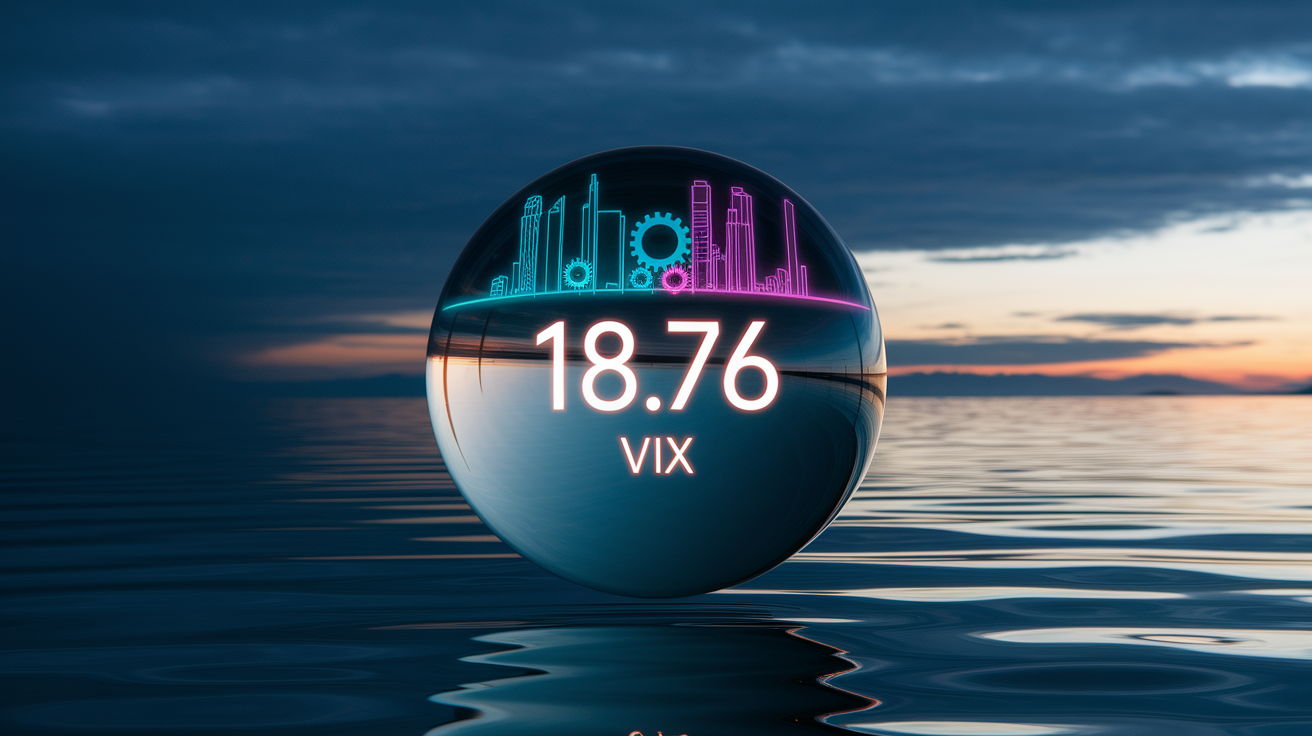
The VIX dropping to 18.76 is catching attention from strategists who see it as complacency, not calm. With oil still elevated, geopolitical uncertainty in the Strait of Hormuz, and a hawkish Fed testimony, the low volatility reading suggests heavy short-volatility positioning and call-buying into mega-cap earnings. This setup mirrors early 2018, when the VIX spiked above 50 in days as positioning unwound violently. Treasury yields touched an 11-day high yesterday before edging down. Both the 10-year and the U.S. dollar index have been rangebound. Any breakout higher in either would probably pressure stocks.
Options data shows increased retail and institutional call buying into the April 29 and April 30 mega-cap earnings wave (Microsoft, Amazon, Alphabet, Meta, Apple). This positioning amplifies the potential for large swings around earnings prints, especially if guidance disappoints or revenue growth slows. Liquidity conditions are uneven. Sector rotations reverse quickly on headlines. The recent 11-day recovery erased all war-related losses, but the rally’s been led by a narrow set of names. Oil narratives, social media sentiment, and algorithmic momentum can shift the tape fast.
The top three real-time volatility triggers:
Low VIX amid high geopolitical and oil risk. The disconnect between implied volatility and actual event risk raises the odds of a sharp vol spike if selling accelerates.
Upcoming PCE inflation data on April 30. The Fed’s preferred inflation measure could reset rate-cut expectations if the print runs hotter than the 3.4% long-term consumer expectation.
Mega-cap earnings concentration. Microsoft, Amazon, Alphabet, Meta, and Apple report April 29-30. Their combined weight in the S&P 500 means guidance misses could erase the week’s gains.
Sector-By-Sector Breakdown of Market Weakness

Energy and materials led 2026 gains with over 10% increases year-to-date, but both sectors weakened on April 24 as crude eased from earlier highs. ConocoPhillips fell roughly 2%, and airlines cutting capacity in response to higher fuel costs pressured consumer discretionary. Software snapped an eight-day winning streak and is down nearly 30% since last fall. Workday, Microsoft, and Intuit all fell Thursday after disappointing outlooks from IBM and ServiceNow.
Financials and health care lagged, both down approximately 5% year-to-date, as rising energy costs and supply-chain friction threaten margins later in the year. Industrials showed mixed performance. Union Pacific jumped 8% and CSX climbed 7% on Thursday after CSX reported quarterly volume growth of 3% and raised guidance. But the sector remains sensitive to oil and geopolitical shocks. Consumer staples also faced pressure as inflation expectations rose and the University of Michigan sentiment data suggested households are feeling the pinch from gasoline prices.
| Sector | % Change YTD | Top Mover |
|---|---|---|
| Energy | +10% | ConocoPhillips (COP) -2% |
| Materials | +10% | Mixed performance |
| Technology | Narrow gains | Intel (INTC) +28% |
| Software | -30% since fall | IBM, ServiceNow weak |
| Industrials | +10% | Union Pacific (UNP) +8% |
| Financials | -5% | Sector lag on rates |
| Health Care | -5% | Sector lag on costs |
| Consumer Discretionary | Pressure | Airlines cutting capacity |
Major Stocks Making Headlines Today

Intel dominated the session, surging nearly 30% pre-open and holding gains of roughly 25% in early trading, reaching a record above its dot-com era high. The move followed a quarterly earnings and revenue beat. Foundry revenue was up 16% year-over-year and data center and AI revenue climbed 22%. The rally rippled through semiconductors. AMD jumped 12% early. ARM, MRVL, SMCI, ASML, and TSM all rose at least 3.5%. Taiwan Semiconductor Manufacturing added 5% after regulators eased limits on single-stock fund holdings.
Meta fell 2.3% then inched higher after announcing plans to cut roughly 8,000 jobs, about 10% of its workforce. Nike edged up 0.5% despite planning around 1,400 layoffs. Qualcomm jumped roughly 5% on the chip rally but remains down about 20% year-to-date amid analyst cuts tied to memory costs. Travelers and Home Depot were flagged as the biggest earnings losers for the day. Spirit Aviation surged on White House rescue deal speculation and Avis collapsed after its speculative rally reversed sharply.
Intel (INTC) posted a ~28% gain. Blowout Q1 earnings, foundry +16% YoY, data center +22% YoY, guidance impressed.
AMD climbed 12%, riding Intel’s AI and chip strength.
Meta (META) fell 2.3% after announcing ~8,000 job cuts (10% of workforce).
Taiwan Semiconductor (TSM) rose 5%. Regulators eased single-stock fund limits.
Qualcomm (QCOM) was up ~5%, but down 20% YTD on memory cost concerns.
Spirit Aviation surged on White House rescue deal reports. Avis collapsed after a 700%+ rally.
Economic Data Impacting Today’s Market Movement

Final April University of Michigan Consumer Sentiment was due at 10 a.m. ET, with the Briefing.com consensus at 47.6, unchanged from the preliminary reading. Long-term inflation expectations rose in the preliminary to 3.4% from 3.2% in March. Short-term expectations also climbed, both linked to gasoline prices. The sentiment index fell to record lows, below 2008 financial crisis and 2020 pandemic levels. Households feel severe pressure despite resilient retail sales and near-record-low jobless claims.
March retail sales rose 1.7%, above the 1.6% expectation. Control-group retail sales were up 0.7%. Weekly initial jobless claims continued near historical lows. The ADP employment report showed private employers added roughly 55,000 jobs in the four weeks ending April 4. But the disconnect between hard economic data and consumer sentiment remains stark. Average tax refunds of approximately $3,400 (an 11% increase) and total household stimulus expected to reach roughly $200 billion in 2026 are offsetting an estimated $80 to $100 billion increase in fuel spending.
The 10-year Treasury yield closed around 4.30% on April 22, touching an 11-day high yesterday before easing. A sustained rise in yields or the U.S. dollar index would probably pressure stocks further. The upcoming FOMC interest-rate decision on April 29 and March PCE (core PCE) data on April 30 are the next high-impact catalysts that could reset expectations for rate cuts. The Fed’s preferred inflation measure matters here.
Consumer sentiment is at record lows, signaling household anxiety despite strong retail sales and low unemployment. Inflation expectations are rising. Long-term is now 3.4%, short-term also up, driven by gasoline. Treasury yields are near 11-day highs. Any breakout above 4.30% could trigger equity selling. Upcoming PCE data on April 30 matters. Hotter-than-expected inflation would hurt rate-cut hopes and sentiment.
Global Factors Adding Pressure to U.S. Markets

Overseas markets showed mixed performance. Japan’s Nikkei reached a record high near 60,000 on April 22. The CAC 40 fell sharply on April 24. The Eurozone ZEW economic expectations survey dropped to its lowest level since 2022, signaling deteriorating sentiment in Europe. Geopolitical tensions remain the primary driver. The Strait of Hormuz is still closed despite a 10-day Israel-Lebanon ceasefire declared on April 17 and the president’s three-week extension. Iran declared the strait open to commercial shipping during the ceasefire, but uncertainty about U.S. participation in talks and the potential for renewed conflict kept oil elevated and risk sentiment fragile.
Crude oil rose to approximately $96 per barrel for WTI and above $105 for Brent, both up over 65% in 2026. Energy futures markets expect prices to fall back to the mid-$70 range by year-end. But permabear David Roche warned of a potential 10% shortfall in oil and gas even if a U.S.-Iran peace deal occurs. George Noble highlighted a disconnect between physical oil markets and oil futures amid Iran war tensions, calling it a potential warning signal. Global supply chains remain strained. Commodity shocks continue to pressure industrials, consumer discretionary, and materials.
The ECB rate decision on April 30 is also on the calendar. Any hawkish signals from Europe could strengthen the dollar and weigh on U.S. multinationals. Kevin Warsh’s nomination as the next Fed chair to succeed Jerome Powell (whose term runs through May 15, 2026) has fueled speculation about a dovish policy shift. His Senate testimony this week was read as relatively hawkish, complicating the outlook for global easing cycles.
Expert Insights on Today’s Market Conditions

Goldman Sachs cautioned that after a rapid relief rally, the risks of another market dip are high. Forecasters also warned of a speculative blow-off top that could end in a painful decline. One research team flagged that inflation is being underestimated and sees potential for 1970s-style dynamics that could still act as a tailwind for stocks in some scenarios, though the path would be volatile. Citi warned the U.S. economy may be overheating, signaling elevated growth with hotter inflation risks rather than a Goldilocks scenario. These warnings come as the market recovered all war-related losses in just 11 trading days, a pace that some strategists see as unsustainable without broader participation beyond mega-caps.
A top BlackRock strategist identified four major market trends to watch and outlined how to invest in each. A wealth-management executive flagged that AI adoption could disrupt early-retirement strategies like Coast FIRE. Market veterans point to untapped potential. Cash on the sidelines, strong labor dynamics, and record household stimulus support the record-setting rally, even amid the stated risks. Still, the combination of low VIX, high oil, elevated geopolitical risk, and concentrated earnings exposure in the next week has analysts urging caution.
Kevin Warsh’s testimony reinforced the view that there’s no compelling case for rate cuts in the near term. That’s tempered dovish expectations despite his nomination as the next Fed chair. Strategists now expect the Fed to hold rates steady at the April 29 meeting and are watching the March PCE print on April 30 for clues on the timing of the first cut. The S&P 500 is projected to post nearly 14% earnings growth in the first quarter, marking the sixth consecutive quarter of double-digit growth. But the concentration in tech is projected to rise roughly 46% driven by AI demand. Any disappointment from Microsoft, Amazon, Alphabet, Meta, or Apple could flip sentiment quickly.
Final Words
Stocks slipped as major indexes fell, helped along by a jump in Treasury yields, a string of softer-than-expected earnings, and fresh geopolitical and commodity pressure. The VIX ticked up, and leadership rotated toward defensives while big names weighed on the tape.
If you’re asking what is wrong with the stock market today, it’s a simple mix: rising rates, company disappointments, and global shocks driving short-term fear. Watch key data and Fed comments — volatility stings, but it also creates selective buying opportunities.
FAQ
Q: Why is the stock market down and why did it drop 700 points today?
A: The stock market is down and fell about 700 points today because rising Treasury yields, weak earnings, and a surge in risk aversion triggered broad selling, hitting growth and large-cap tech hardest.
Q: What stocks are crashing right now?
A: The stocks crashing right now are often high-multiple growth names, small caps, and companies that missed earnings or cut guidance; use real-time scanners or market heat maps to find the biggest losers by sector.
Q: Can I lose my 401k if the market crashes?
A: You can lose value in your 401(k) if the market crashes, but the account remains intact; staying invested, diversifying, and rebalancing lowers long-term risk and improves recovery chances.