

Think Fed meeting dates are boring? Think again.
These eight FOMC sessions steer interest-rate moves, market volatility, and the dollar, with a two-day clock and a 2:00 p.m. ET statement that often sparks instant moves.
This post gives the full 2025 FOMC calendar, exact decision times, what the releases mean for stocks, bonds, and currencies, and the key reports to watch before each meeting.
Bookmark it if you trade or manage risk. These are the dates that matter.
Complete Current-Year US Federal Reserve Meeting Dates (Full FOMC Schedule)

The Federal Open Market Committee meets eight times a year to review economic conditions and decide where interest rates should go. Each meeting runs two days. The policy statement drops on the final afternoon, usually at 2:00 p.m. ET. If you’re watching markets, knowing these dates ahead of time matters. They’re the pivot points where volatility spikes and policy shifts can move everything from stocks to bonds to the dollar.
Here’s the full 2026 FOMC calendar, all eight meetings with decision times.
| Date Range | Month | Decision Release Time |
|---|---|---|
| January 27–28, 2026 | January | 2:00 p.m. ET |
| March 17–18, 2026 | March | 2:00 p.m. ET |
| April 28–29, 2026 | April | 2:00 p.m. ET |
| June 16–17, 2026 | June | 2:00 p.m. ET |
| July 28–29, 2026 | July | 2:00 p.m. ET |
| September 15–16, 2026 | September | 2:00 p.m. ET |
| October 27–28, 2026 | October | 2:00 p.m. ET |
| December 8–9, 2026 | December | 2:00 p.m. ET |
Next up is June 16–17, 2026. The statement hits at 2:00 p.m. Eastern on June 17. If the Fed Chair does a press conference, it starts around 2:30 p.m. ET. Markets can swing within minutes of the release, so if you’re trading equities, bonds, or commodities, tracking these times keeps you ahead of the move.
Understanding the FOMC Meeting Calendar Structure

FOMC meetings follow a two-day format. Day one is all about data. Fed staff economists present reports on employment, inflation, GDP growth, global financial conditions. Members talk through what they’re seeing and outline their initial views on policy. Day two, they vote on the target federal funds rate (the overnight rate banks charge each other) and finalize the statement language.
The two-day setup gives policymakers time to absorb a lot of information and debate different scenarios before locking in a rate decision. The statement goes out at 2:00 p.m. ET on day two, giving markets a fixed moment to react.
These eight meetings are spread out predictably. You’ll see them in January, March, April or May, June, July, September, October, and December. That’s roughly six to seven weeks between most sessions, enough time for the committee to watch new employment reports, CPI prints, retail sales figures. The regular spacing also lets businesses and financial institutions plan around potential rate changes instead of guessing when the Fed might move.
Federal Reserve Announcement Times and Press Conference Schedule

The Fed sticks to a strict timeline for releasing decisions and supporting materials. Knowing this schedule helps you position before volatility hits and makes sure you don’t miss forward guidance or updated economic projections.
Each meeting wraps with a coordinated release sequence that unfolds over weeks.
Policy statement release: The FOMC statement publishes at 2:00 p.m. Eastern Time on the final day. It covers the interest rate decision, any changes to asset purchases, and forward guidance.
Chair press conference: When scheduled, the Chair’s press conference starts around 2:30 p.m. ET, about 30 minutes after the statement. The Chair answers reporter questions, often clarifying the committee’s thinking and dropping hints about future policy.
Meeting minutes: Detailed minutes come out roughly three weeks later, also at 2:00 p.m. ET. They go deeper into the debate among members, showing who wanted rate hikes, cuts, or holds, and what economic risks were flagged.
Summary of Economic Projections (SEP): Published four times a year at the March, June, September, and December meetings. The SEP includes updated forecasts for GDP growth, unemployment, inflation, and the federal funds rate.
Dot plot: Included in the SEP, the dot plot shows where each FOMC participant expects interest rates to be at the end of this year, next year, and the longer run. Markets watch shifts in the median dot to gauge the committee’s policy path.
Market Impact Calendar Around US Federal Reserve Meeting Dates

Financial markets treat FOMC decision days as high-priority events because the federal funds rate touches borrowing costs, currency values, and risk appetite across every asset class. Equities, Treasuries, the dollar, and commodities can all move fast within minutes of the 2:00 p.m. ET statement. A surprise rate hike usually strengthens the dollar as higher yields pull in foreign capital. Stocks may sell off if investors worry tighter financial conditions will slow corporate earnings growth.
Bond markets respond instantly to any change in the federal funds rate or tweaks in forward guidance language. If the statement signals the Fed expects to raise rates more, Treasury yields climb and bond prices fall. Dovish language (the committee is comfortable pausing or cutting rates) can rally bonds and compress yields. The yield curve itself can steepen or flatten depending on how the committee frames near-term versus longer-term policy.
Commodity prices, especially gold and crude oil, are sensitive to rate decisions. Interest rates affect the opportunity cost of holding non-yielding assets and influence the dollar’s value. Gold often drops after rate hikes because investors shift to interest-bearing instruments, and a stronger dollar makes dollar-denominated gold pricier for foreign buyers. Oil can fall if higher rates raise recession fears and expected demand destruction, though supply factors and geopolitical risk also matter. Forex traders watch FOMC days closely because changes in U.S. rates alter yield differentials between the dollar and other currencies, driving flows into or out of USD pairs.
Historical US Federal Reserve Meeting Dates and Notable Past Outcomes

The Federal Reserve has held eight scheduled FOMC meetings per year for decades, creating a long record that shows patterns in policy cycles and market reactions. Reviewing past meeting outcomes helps you understand how the committee has handled different economic environments, from rapid inflation in the early 1980s to the zero-rate period after the 2008 financial crisis and the aggressive tightening cycle that started in 2022.
Minutes released three weeks after each meeting offer a look into the internal debate, showing which members were more hawkish (favoring higher rates to control inflation) or dovish (preferring lower rates to support employment). Over time, these minutes have captured major policy pivots, including the start and end of quantitative easing programs, the introduction of forward guidance as a communication tool, and emergency rate cuts during financial crises.
Notable historical FOMC outcomes include:
The emergency inter-meeting rate cut to near zero in March 2020 as the pandemic hit, bypassing the regular schedule to provide immediate liquidity support.
The December 2015 rate hike that ended seven years of zero rates, signaling confidence in the economic recovery and kicking off a gradual tightening cycle.
The series of 75-basis-point hikes in 2022, the fastest tightening pace in decades, aimed at curbing inflation that had surged above 8 percent.
The pivot to rate cuts in late 2019, reversing three years of hikes amid slowing global growth and trade tensions, even before the pandemic arrived.
How Fed Meeting Dates Are Set and Who Attends
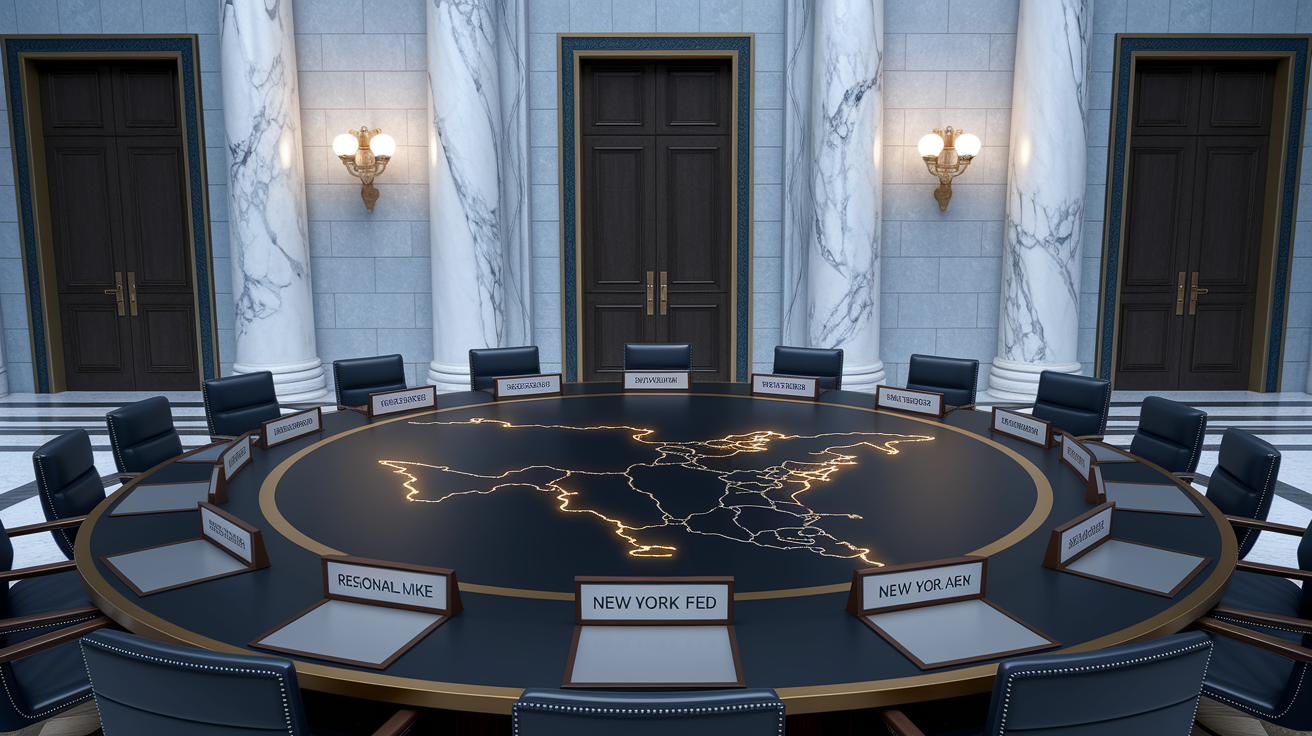
The FOMC meeting calendar is set well ahead and published publicly to give markets time to prepare. The Federal Reserve Board sets the schedule for the coming calendar year, usually announcing it in the preceding fall or early winter. This advance notice lets financial institutions, corporations, and government agencies coordinate their own planning around known decision dates.
Meetings happen at the Federal Reserve’s headquarters in Washington, D.C., in the Board’s main conference room. While some Fed communications and staff briefings may occur virtually, the core policy discussion traditionally takes place in person. That in-person format makes it easier to have detailed discussions and build real-time consensus. The two-day structure gives members time to review extensive data packets prepared by Fed staff economists, hear presentations on current economic conditions, debate policy scenarios, and finalize the statement language before the public release.
FOMC Voting Rotation
The FOMC has 12 voting members each year. Seven of those seats are held by the Federal Reserve Board of Governors, who are appointed by the President and confirmed by the Senate. The remaining five voting seats rotate annually among the 12 regional Federal Reserve Bank presidents. The president of the Federal Reserve Bank of New York holds a permanent voting seat because the New York Fed plays a central role in implementing open market operations. The other 11 regional presidents rotate through four voting slots, with the rotation groups organized by geography to make sure there’s broad representation. Non-voting presidents still attend meetings and join the discussion, so all 12 regional banks contribute to the policy debate even when they don’t cast a formal vote.
Timeline of a Typical Federal Reserve Meeting and Post-Meeting Releases
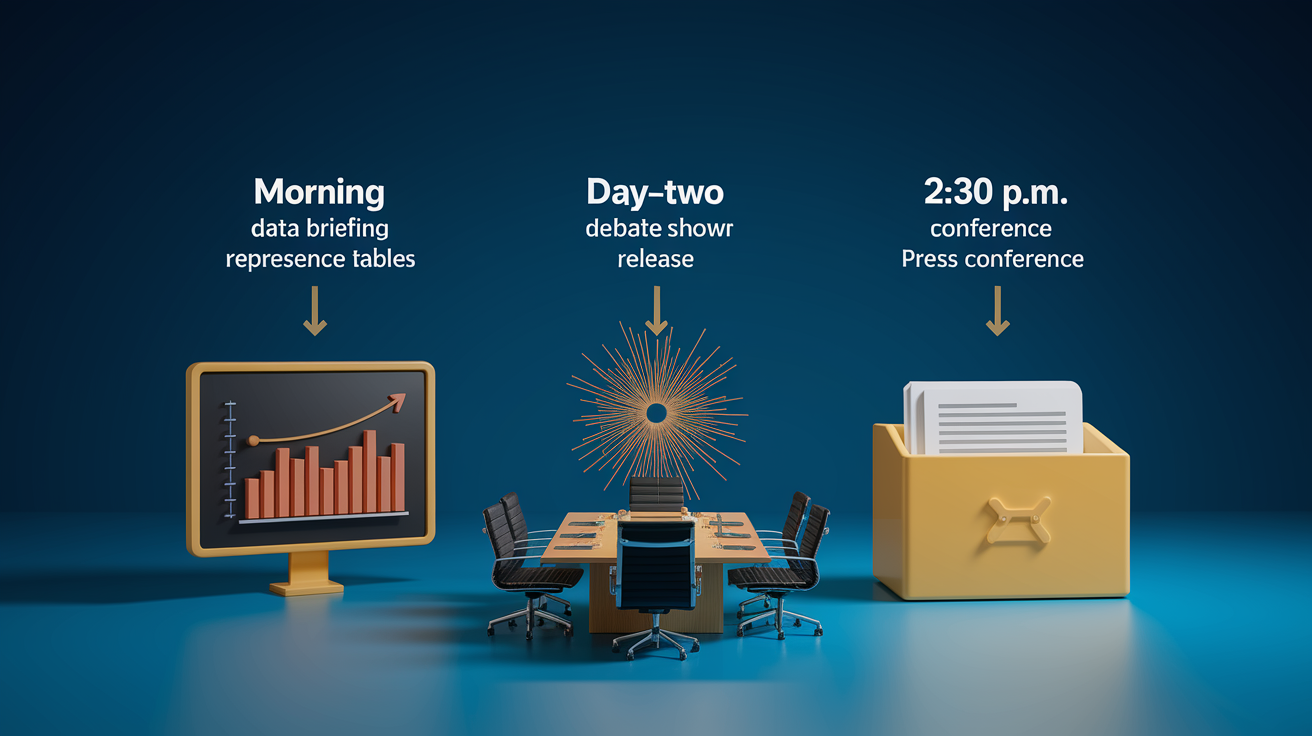
A standard FOMC meeting unfolds over two days, with a carefully planned sequence of briefings, deliberations, and public releases. Understanding this timeline tells you when to watch for new information and when market-moving announcements will drop.
Day 1, morning through afternoon: Fed staff economists present detailed reports on current economic conditions, covering employment, inflation, consumer spending, business investment, housing, and international developments. Members review these presentations and start discussing their individual takes on the economy and what policy stance makes sense.
Day 2, morning: Members continue debate, refine their views, and draft the policy statement. The Chair often leads a discussion of the language to be used in the statement, making sure it reflects the committee’s consensus and gives clear forward guidance to the public.
Day 2, 2:00 p.m. ET: The FOMC releases the policy statement to the public. The statement announces the target range for the federal funds rate, explains the committee’s rationale, and may include guidance about future policy. Markets react right away as algorithms and traders parse the text for changes in tone or wording.
Day 2, approximately 2:30 p.m. ET: When scheduled, the Federal Reserve Chair holds a press conference. Reporters ask questions about the decision, the economic outlook, and potential future moves. The Chair’s answers can clarify vague statement language or introduce new information that shifts market expectations.
Approximately three weeks later, 2:00 p.m. ET: The Fed publishes the meeting minutes, giving a detailed account of the policy discussion. Minutes show which members wanted different policy options, what data were most influential, and what risks the committee debated. Transcripts of the meeting are released to the public after a five-year lag, giving historians and researchers a complete record of the deliberations.
Investor Tools for Tracking US Federal Reserve Meeting Dates

Staying current with FOMC meeting dates requires reliable sources and easy integration into your existing calendar and alert systems. The Federal Reserve publishes the official annual FOMC calendar on its public website, and that schedule is available as a downloadable ICS file (iCalendar format) that you can import directly into Outlook, Google Calendar, Apple Calendar, or other scheduling apps. Importing the ICS file automatically populates all eight meeting dates and can include reminders set for the afternoon of the decision day, so you don’t miss the 2:00 p.m. ET statement release.
Financial news platforms and market data providers also offer RSS feeds, email alerts, and mobile app notifications tied to FOMC events. Setting up alerts for statement releases, press conferences, and minutes publications keeps critical dates front of mind without requiring manual calendar checks. Many brokerage platforms and trading apps include built-in economic calendars that highlight Fed meetings alongside other high-impact data releases such as non-farm payrolls and CPI reports.
If the Federal Reserve makes any changes to the published schedule, such as adding an emergency inter-meeting session or adjusting a meeting date because of unforeseen circumstances, the updated calendar is posted promptly on the Fed’s website and shared through official press releases. Monitoring the Federal Reserve’s official communications channels and subscribing to updates from reputable financial news sources means you get real-time notice of any schedule revisions. Combining the official ICS download with push notifications from a trusted news app creates a layered alert system that cuts the risk of missing a policy announcement or reacting late to market-moving Fed language.
Final Words
Eight confirmed FOMC meetings are set for 2026; this calendar lists them, explains the two-day meeting rhythm, and shows when the policy statement (2:00 p.m. ET) and press conference (~2:30 p.m. ET) usually drop.
We covered market impact, the minutes timetable, who attends, and simple ways to add the fed calendar to your trackers so you don’t miss a release.
Keep this page handy — checking the us federal reserve meeting dates before a trade or rebalance makes timing clearer and keeps you ready for the next move.
FAQ
Q: What is the date of the next Federal Reserve interest rate meeting / next interest rate decision?
A: The next interest-rate decision is scheduled for June 16–17, 2026; the FOMC usually releases its policy statement about 2:00 p.m. ET on the final day, often followed by a chair press conference.
Q: Will the Fed cut rates in October?
A: Whether the Fed will cut rates in October is uncertain; it depends on incoming inflation, employment and growth data and Fed guidance ahead of the Oct 27–28, 2026 FOMC meeting.