


Think the Fed sets mortgage rates? Think again.
The Fed doesn’t price mortgages directly; its meetings send ripples through bond markets that lenders feel.
Hear the Fed sound hawkish (leaning toward higher rates) and 10-year Treasury yields often jump, lifting mortgage rates.
Hear it pivot toward easing and MBS (mortgage-backed securities, pools of home loans sold to investors) can look more attractive, pushing rates down.
This post shows how Fed moves and forward guidance shift bond yields, how that changes mortgage pricing, and what borrowers should watch before and after meetings.
How Fed Meeting Outcomes Shape Mortgage Rate Movements
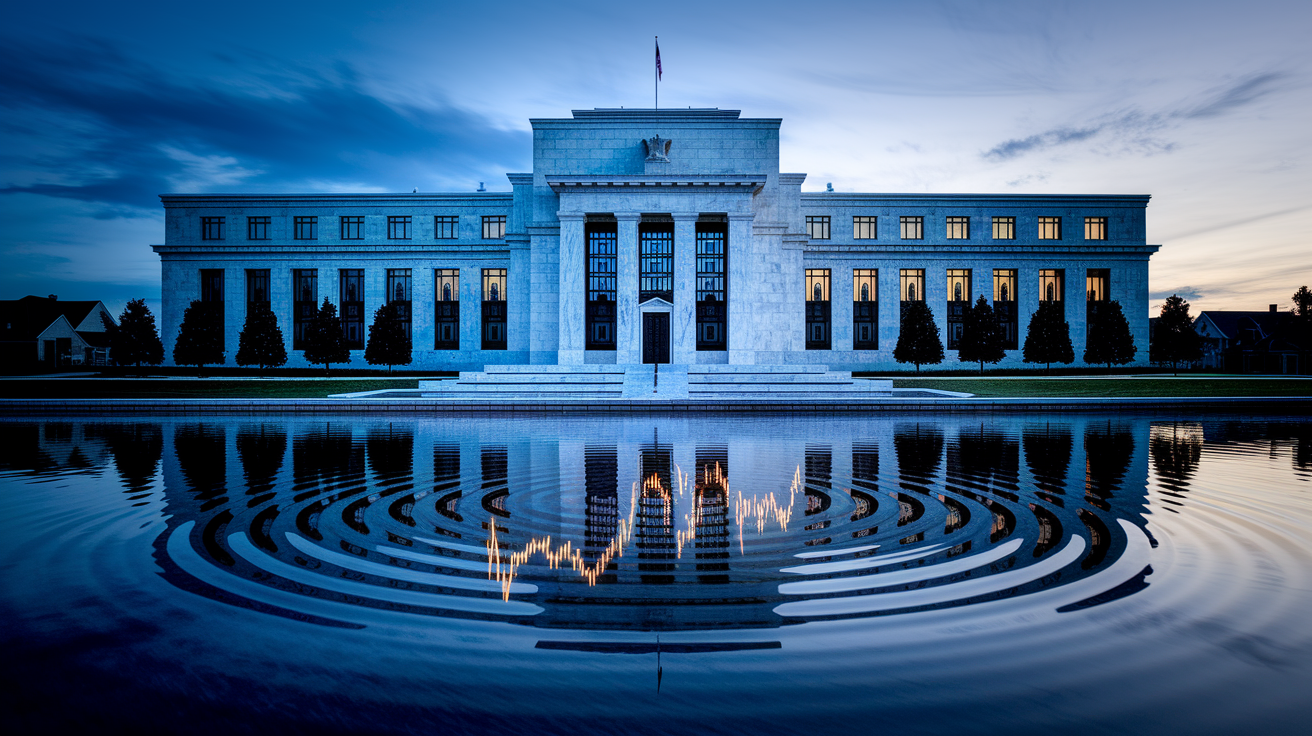
The Fed doesn’t actually set mortgage rates. What it does is create ripples, and mortgage rates react to how markets read those ripples.
When the Fed announces something—whether it’s tweaking the federal funds rate, adjusting its balance sheet, or just changing the tone of its forward guidance—investors immediately start repricing their expectations for growth and inflation. If the Fed sounds more hawkish (meaning it’s leaning toward raising rates), bond yields usually climb because investors see higher borrowing costs ahead. If the Fed pivots toward easing, yields can drop, assuming markets believe inflation will cool off.
Mortgage rates track these yield swings because lenders don’t price loans in a vacuum. They price them based on what investors will pay for mortgage-backed securities in secondary markets.
The 10-year Treasury yield is the benchmark everyone watches for 30-year fixed mortgage pricing. Markets often move that yield within minutes of a Fed announcement, pricing in not just the immediate policy shift but also what the Fed says (or hints) about what comes next. You can have a Fed rate cut of 0.25 percentage points, but if the Fed signals it’s done cutting for a while, the 10-year Treasury can actually rise. That pushes mortgage rates higher despite the cut.
This exact scenario played out in September 2024. The Fed cut rates, but mortgage rates climbed roughly 0.25 to 0.35 percentage points in the week after because markets repriced how many cuts were really coming.
Lenders update their rate sheets fast once bond markets settle. Most wholesale mortgage pricing adjusts within hours. Retail borrowers see updated quotes the same day or within 72 hours, depending on lender pipelines and hedging positions. If you’re under contract or nearing closing, Fed meeting dates bring the highest volatility. Locking a rate before the announcement gives you certainty. Floating leaves you exposed to swings driven by forward guidance, not just the immediate policy move.
Distinguishing the Federal Funds Rate from Mortgage Rates

The federal funds rate is the overnight interest rate banks charge each other for reserve balances. The Fed adjusts this to steer short-term borrowing costs across the economy. Credit cards, savings account yields, and adjustable-rate mortgages tied to short-term indices all respond pretty directly to federal funds rate changes.
Mortgage rates are different. They’re long-term fixed rates that reflect what bond markets expect for inflation, real growth, and risk over decades. A 30-year fixed mortgage competes with 10-year Treasury bonds and other long-dated securities for investor money. Investors want a premium—usually 160 to 200 basis points (1.60% to 2.00%)—above the 10-year Treasury yield to make up for prepayment risk, servicing costs, and credit risk baked into mortgage-backed securities.
A lot of borrowers assume a Fed rate cut of 0.25% will lower their mortgage rate by the same amount. It won’t. The transmission is indirect. The Fed adjusts short-term rates, which changes how investors think about future inflation and growth, which then moves long-term bond yields, which finally shifts mortgage pricing. A quarter-point federal funds cut might move the 10-year Treasury yield by only 10 or 15 basis points if markets had already priced in the cut weeks earlier. The change to mortgage rates ends up being much smaller than borrowers expect.
The Bond Market’s Role in Mortgage Pricing

Mortgage-backed securities are bundles of home loans packaged and sold to investors as bonds. Lenders originate mortgages, sell them into the secondary market, and use the proceeds to fund new loans. Investor demand for MBS directly sets mortgage rates. When demand is strong, MBS prices rise and yields fall, so lenders can offer lower rates to borrowers. When demand weakens—often because competing investments like Treasuries look better—MBS yields rise and mortgage rates follow.
The 10-year Treasury yield anchors this whole process because MBS and Treasuries compete for the same investor dollars. If the 10-year yield jumps 25 basis points after a Fed meeting, MBS yields typically move up 20 to 30 basis points as investors demand higher compensation to hold mortgages instead of risk-free Treasuries.
The spread between MBS yields and Treasury yields can widen or narrow depending on prepayment expectations. When rates fall, homeowners refinance more often, returning principal to MBS investors sooner than expected and reducing the security’s effective duration. That’s called negative convexity, and it forces MBS yields higher relative to Treasuries even when Treasury yields are falling.
Four main bond market forces shape mortgage rates around Fed meetings:
Inflation expectations: Higher expected inflation pushes bond yields up because investors want compensation for eroding purchasing power. Mortgage rates rise in tandem.
Fed balance sheet operations: When the Fed buys MBS or Treasuries (quantitative easing), it increases demand and lowers yields. When it sells or allows holdings to roll off (quantitative tightening), yields rise.
Flight to quality flows: During economic stress, investors buy Treasuries for safety, lowering Treasury yields and often mortgage rates, even if the Fed hasn’t acted yet.
Forward guidance and rate path expectations: If the Fed signals many future rate hikes, long-term yields climb immediately. If it signals a pause, yields can fall before any actual policy change occurs.
How Quickly Lenders Adjust Rates After Fed Announcements

Mortgage lenders reprice rate sheets within hours of a Fed announcement because the secondary MBS market reacts in real time. Wholesale lenders and mortgage bankers monitor live MBS prices and Treasury yields during and immediately after the Fed press conference. When those securities move by 10 or more basis points, lenders issue intraday rate-sheet updates to protect their pipelines from adverse price shifts.
If you’re shopping for rates on Fed meeting days, you can see multiple price changes between morning and afternoon as volatility spikes.
During periods of high uncertainty—surprise Fed guidance or conflicting inflation data—lenders may widen their margins temporarily to manage risk. That means retail mortgage rates can rise even if MBS yields fall slightly. This lag and spread adjustment typically normalize within a few days once bond markets stabilize.
Borrowers with locked rates are insulated from these swings. Those floating a rate face the full brunt of intraday and day-to-day volatility until they lock, making timing around Fed meetings a costly gamble if market expectations shift unfavorably.
Historical Examples of Fed Meetings Impacting Mortgage Rates

In December 2008, the Federal Reserve slashed the federal funds rate to a range of 0.00% to 0.25% and launched large-scale purchases of Treasury securities and agency MBS to stabilize markets during the financial crisis. Over the following months, 30-year fixed mortgage rates declined steadily as the Fed bought billions of dollars of MBS. Rates eventually hit historic lows near 3.5% by late 2012. The immediate post-meeting reaction was muted because markets had anticipated emergency action, but the sustained Fed MBS purchases over years kept mortgage rates suppressed even as the economy recovered.
The May to June 2013 “Taper Tantrum” showed how Fed communication can move rates without any immediate policy change. Fed Chairman Ben Bernanke suggested the central bank might begin tapering its MBS purchases later that year. The 10-year Treasury yield surged roughly 100 basis points over six weeks. Mortgage rates jumped from around 3.5% in early May to near 4.5% by late June. No federal funds rate increase occurred, yet mortgage markets repriced sharply based solely on expected future Fed behavior.
During March 2020, the Fed cut the federal funds rate back to 0.00% to 0.25% and resumed aggressive MBS and Treasury purchases in response to the pandemic. Mortgage rates initially spiked due to market dysfunction and lender capacity constraints, but by late 2020 and into 2021, 30-year fixed rates fell to record lows around 2.6% to 3.0% as the Fed’s balance sheet swelled and inflation remained subdued.
Starting in 2022, the Fed began a rapid tightening cycle, raising the federal funds rate in multiple 0.50 and 0.75 percentage-point increments to combat inflation. The 10-year Treasury yield climbed sharply, and by mid-2023, 30-year mortgage rates had risen into the mid-6% to 7% range. That’s a swing of more than 4 percentage points in under two years.
| Period | Fed Action | Mortgage Rate Movement |
|---|---|---|
| Dec 2008 – 2012 | Cut to 0.00%–0.25%; large-scale MBS purchases | Declined from ~6% to ~3.5% over several years |
| May–June 2013 | Taper talk (no rate change) | Rose ~1.0 percentage point (3.5% to 4.5%) in six weeks |
| Mar 2020 – 2023 | Cut to 0.00%–0.25%, then rapid hikes starting 2022 | Fell to record lows ~2.6%–3.0%, then surged to mid-6%–7% range |
What Borrowers Should Watch Before and After Fed Meetings

Markets are forward looking, meaning much of a Fed decision’s impact on mortgage rates happens before the actual meeting. Borrowers benefit from monitoring inflation reports like the Consumer Price Index and core PCE because sustained inflation above the Fed’s 2% target typically keeps long-term yields elevated. Employment data also matters. Strong job growth can signal the Fed will maintain higher rates longer, pushing mortgage rates up even without an immediate funds rate hike.
Fed meeting minutes and the post-meeting press conference offer clues about future policy direction. If the Fed chair emphasizes “data-dependent” decisions and hints at pausing rate increases, bond markets often rally and mortgage rates can ease. Conversely, hawkish language about persistent inflation risks can send yields higher immediately.
If you’re nearing closing, track these signals in the days leading up to a Fed meeting. Volatility typically peaks on announcement day and in the 48 hours following, making those windows risky for floating a rate.
Key indicators borrowers should track around Fed meetings:
10-year Treasury yield movements: A 0.25 percentage-point rise in the 10-year typically translates to a 0.20 to 0.30 percentage-point increase in mortgage rates within days.
MBS spreads to Treasuries: Widening spreads mean mortgage rates are rising faster than Treasury yields, often due to prepayment risk or reduced investor demand.
Inflation and employment reports released before the meeting: These shape market expectations and can cause pre-meeting rate moves larger than the post-meeting reaction.
Fed forward guidance and dot plot projections: The Fed’s own forecasts for future rate levels help markets price in the likely path of yields over the next year.
Lender rate lock policies and float down options: Understanding your lender’s terms for locking and whether a float down is available, and at what cost, helps you decide whether to lock before a Fed meeting or risk waiting for a potential rate drop.
Final Words
Fed meetings don’t set mortgage rates directly. They shift expectations, which move Treasury yields and, in turn, mortgage pricing.
That transmission can happen within hours. Lenders often reprice quickly, sometimes several times a day during volatile stretches, so tone and guidance matter as much as the headline vote.
Understanding how the fed meeting influences mortgage rates gives clearer clues for timing rate locks and planning a purchase or refinance. Stay aware — that clarity helps you act with more confidence.
FAQ
Q: What is the 2% rule for refinancing?
A: The 2% rule for refinancing is a guideline saying refinance when your new interest rate is at least two percentage points lower than your current rate, generally enough to cover closing costs and shorten the break-even time.
Q: What is the 3 7 3 rule in mortgage?
A: The 3‑7‑3 rule isn’t a universal mortgage standard; its meaning varies by lender or region—often a quick heuristic about down payment, credit/term, or rate thresholds. Always confirm the definition with your lender.
Q: How much is $100,000 mortgage at 6% for 30 years?
A: A $100,000 mortgage at 6% for 30 years has a monthly principal-and-interest payment of about $600, totaling roughly $215,838 over the loan—about $115,838 in interest.
Q: Will we ever see a 3% mortgage rate again?
A: Seeing 3% mortgage rates again is possible but not guaranteed; it requires sustained low inflation, significant Fed rate cuts and lower Treasury yields, so timing and odds remain uncertain.